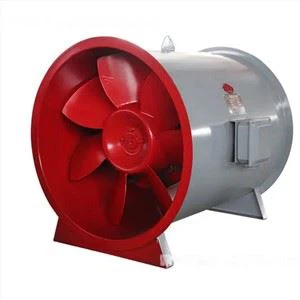
As a supplier of Subway Wind Fans, I've been deeply involved in understanding and meeting the strict standards these fans must adhere to. In this blog, I'll explore the key standards that Subway Wind Fans need to meet, ensuring their reliability, safety, and efficiency in subway environments.
Performance Standards
Airflow and Pressure Requirements
Subway Wind Fans are crucial for maintaining proper ventilation in subway systems. They need to provide sufficient airflow to remove pollutants, control temperature, and ensure a comfortable environment for passengers and staff. The airflow rate is typically measured in cubic meters per second (m³/s) or cubic feet per minute (CFM). For example, in a busy subway station, the fans may need to generate an airflow of several hundred m³/s to effectively ventilate the large space.
In addition to airflow, the fans must also be able to generate the required static pressure. Static pressure is necessary to overcome the resistance in the ventilation ducts and ensure that the air reaches all areas of the subway system. The static pressure requirements can vary depending on the length and complexity of the ductwork, as well as the number of bends and restrictions. A well - designed Subway Wind Fan should be able to achieve the specified static pressure while maintaining high - efficiency operation.
Efficiency
Energy efficiency is a major concern in subway ventilation systems. Subway Wind Fans operate continuously, and any improvement in efficiency can lead to significant energy savings over time. The efficiency of a fan is usually expressed as the ratio of the useful power output (air power) to the input power (electrical power). High - efficiency fans are designed with advanced aerodynamic profiles, optimized blade shapes, and efficient motor designs.
For instance, modern Subway Wind Fans may use variable - speed drives (VSDs) to adjust the fan speed according to the actual ventilation requirements. This allows the fan to operate at its most efficient point, reducing energy consumption during periods of low demand. By meeting high - efficiency standards, subway operators can not only save on energy costs but also contribute to environmental sustainability.
Safety Standards
Fire and Smoke Resistance
In the event of a fire in the subway, Subway Wind Fans play a critical role in smoke extraction. They need to be able to operate under high - temperature conditions for a specified period to remove smoke and provide a clear evacuation path. The fans must be constructed with fire - resistant materials and designed to withstand the intense heat generated during a fire.
For example, the SDS High Temperature Axial Flow Smoke Exhaust Fan is specifically designed for smoke extraction in subway tunnels. It can operate at high temperatures for a certain duration, typically 1 - 2 hours, to ensure the safety of passengers and firefighters. These fans are also equipped with features such as fire - resistant insulation and high - temperature bearings to prevent overheating and mechanical failure.
Explosion Protection
Subway environments may contain flammable gases or vapors, especially in areas where there are electrical equipment or fuel storage. Subway Wind Fans used in these areas must meet explosion - proof standards to prevent the ignition of explosive mixtures. The SDS Series Explosion Proof Jet Fan For Tunnels is designed to operate safely in potentially explosive atmospheres.


Explosion - proof fans are constructed with special enclosures and electrical components that prevent the release of sparks or hot surfaces that could ignite flammable substances. They are also tested and certified to meet international explosion - proof standards, such as ATEX or IECEx, depending on the region of use.
Structural Integrity
Subway Wind Fans are often installed in challenging environments, including underground tunnels and stations. They need to be structurally robust to withstand the mechanical stresses, vibrations, and impacts that may occur during operation. The fan housing, blades, and motor mounts must be designed and fabricated to ensure long - term durability.
Regular inspections and maintenance are also essential to ensure the structural integrity of the fans. This includes checking for signs of corrosion, fatigue, and loose connections. By meeting strict structural integrity standards, Subway Wind Fans can operate safely and reliably for many years.
Environmental and Noise Standards
Noise Emission
Noise pollution is a significant issue in subway stations and tunnels. Subway Wind Fans can generate a considerable amount of noise during operation, which can be a nuisance to passengers and nearby residents. Therefore, the fans need to meet strict noise emission standards.
Modern Subway Wind Fans are designed with noise - reducing features, such as sound - absorbing materials in the fan housing, aerodynamically optimized blade designs to reduce turbulence, and vibration - isolation mounts. By minimizing noise emissions, the fans can create a more comfortable environment for subway users and comply with local environmental noise regulations.
Environmental Compatibility
Subway Wind Fans should be environmentally friendly in terms of their manufacturing, operation, and disposal. The materials used in the fan construction should be recyclable or have a low environmental impact. Additionally, the fan's operation should not produce harmful emissions or pollutants.
For example, fans with energy - efficient motors reduce the overall carbon footprint of the subway ventilation system. And at the end of their service life, the fans should be designed in a way that allows for easy disassembly and recycling of components.
Quality and Certification Standards
International and National Standards
Subway Wind Fans need to comply with a variety of international and national standards. For example, in Europe, fans may need to meet the requirements of the European Union's Machinery Directive, which ensures the safety and performance of machinery. In the United States, standards such as those set by the American Society of Heating, Refrigerating and Air - Conditioning Engineers (ASHRAE) may apply.
Certification bodies play an important role in verifying that Subway Wind Fans meet these standards. Fans that are certified by recognized organizations, such as UL (Underwriters Laboratories) or CE (Conformité Européene), provide assurance to subway operators that the products have been thoroughly tested and meet the necessary requirements.
Customization and Adaptability
Subway systems around the world have different requirements based on their size, layout, and usage patterns. A good Subway Wind Fan supplier should be able to offer customized solutions to meet these specific needs. This may involve designing fans with different sizes, airflow capacities, and performance characteristics.
For example, a subway system in a densely populated city may require larger - capacity fans with higher airflow rates, while a smaller - scale subway in a suburban area may need more compact and energy - efficient fans. The ability to adapt to different requirements is an important standard for Subway Wind Fans.
If you are in the market for high - quality Subway Wind Fans that meet all the necessary standards, we are here to help. Our company offers a wide range of Subway Wind Fans that are designed and manufactured to the highest industry standards. Whether you need fans for a new subway project or replacement fans for an existing system, we can provide you with customized solutions. Contact us to start a procurement discussion and find the best ventilation solutions for your subway needs.
References
- ASHRAE Handbook of HVAC Systems and Equipment.
- European Union Machinery Directive 2006/42/EC.
- Standards related to explosion - proof equipment such as ATEX and IECEx.