


Axial Flow Ventilator
What is an Axial Flow Ventilator?
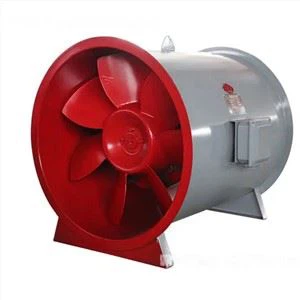
The Axial Flow Ventilator Fan stands as the pinnacle of innovation in ventilation technology, offering an unparalleled blend of efficiency, reliability, and performance. Designed with precision engineering, its axial impeller blades meticulously direct airflow in a straight line, ensuring optimal circulation and ventilation within various industrial and commercial settings. From warehouses to manufacturing plants, data centers to agricultural facilities, this fan proves indispensable, adeptly managing temperature and air quality with finesse. Its robust construction and advanced materials guarantee durability and longevity, withstanding the rigors of continuous operation without compromise. What truly sets this ventilator fan apart is its seamless integration of cutting-edge features, including variable speed control and intelligent monitoring systems, allowing for customizable airflow management tailored to specific needs. Beyond its technical prowess, the Axial Flow Ventilator Fan embodies a commitment to sustainability, optimizing energy usage to minimize environmental impact while maximizing efficiency. As a cornerstone of modern ventilation solutions, it exemplifies the marriage of innovation and practicality, offering a breath of fresh air in any space it serves.




Benefits of Using Industrial Axial Flow Ventilator
Industrial axial flow fans assure efficient airflow, which is why they are cooling towers and exhausts. The cooling towers cannot dissipate heat if the airflow is not proper. The water system and fill material inside these fans operate properly due to a consistent airflow from the cooler fan, which is an axial fan. The axial fans can produce a large volume of air at a regular pace and they also ensure even air circulation due to the airfoil blades.
The speed of axial flow fans can be easily altered to suit the needs of the cooling tower or exhaust fans. The fans will continue to produce high airflow even if the speed is decreased. Against this, decreasing the speed can have a direct impact on the airflow of centrifugal fans.
Most industrial axial fans are made from aluminum, which makes them durable, reliable, lightweight, and user-friendly at the same time. Sometimes they are also made of stainless steel, which improves their performance in harsh environments. Many manufacturers provide industrial axial fans equipped with spark-resistant and cast aluminum-made propellers, which assures their safety in high-temperature applications. Their durable construction is one of the prime reasons for employing these fans in ships, aircraft, helicopters, and hydrofoils.
Axial fans possess simpler designs than other industrial fan types. These fans have simple and open designs. Thus, any operational issues that arise can be easily identified and rectified. This is one of the reasons why these fans are widely used in industrial cooling and exhaust applications.
These fans possess a compact footprint and lightweight designs than their earlier counterparts, which helps improve the lifespan of different mechanical components in it. Generally, axial fans have an improved lifespan than other industrial fans due to their high mechanical strength and optimal designs.
Industrial axial flow fans produce lower mechanical noise than conventional fans. This makes it an ideal choice for applications where noise can be a big concern.
Components of an Axial Flow Ventilator
Impeller or Blades
At the heart of an axial fan lies the impeller, often referred to as the fan blades. The number of blades can vary, and they are typically designed with an aerodynamic profile to optimize airflow efficiency.
Hub
The hub is the central portion of the impeller where the blades are attached. It connects the blades to the shaft and ensures they maintain their proper positions during rotation.
Shaft
The shaft is the mechanical component that connects the impeller to the fan's motor. As the motor rotates the shaft, it, in turn, spins the impeller, creating airflow.
Motor
The motor provides the necessary mechanical energy to drive the axial fan. Depending on the application, axial fans can be powered by electric motors, internal combustion engines, or other sources.
Casing
Surrounding the impeller and motor is the fan's casing. This casing helps direct the airflow and also provides protection for the internal components.
Applications of Axial Flow Ventilator


Axial fans are widely used in HVAC systems for both residential and commercial buildings. They help to circulate air, remove stale or hot air, and maintain a comfortable indoor environment.
Computers, servers, and other electronic devices generate heat during operation. Axial fans are employed to dissipate this heat and prevent overheating, ensuring the proper functioning of these devices.
In automobiles, axial fans are often used to cool engines and radiators by improving the airflow over them.
Many manufacturing processes generate heat, and axial fans are used to control the temperature in industrial settings, such as in furnaces, ovens, and welding operations.
Axial fans are utilized in agricultural applications for grain drying, barn ventilation, and crop cooling.

How are Axial Flow Ventilators installed?
Recirculation fans are usually suspended from a ceiling and are not flange-mounted on any side. In this installation situation, these fans do not create static pressure, as they only circulate the air in the room.
Flange-mounted fans normally do not have a pronounced inflow. They have a standardized flange on both sides of the nozzle, which enables the fan to be installed in ventilation ducts for ventilating buildings.
Fans flanged on the suction side (single-sided flange mounting) extract the air from a room and distribute it homogeneously via the heat sink. The temperatures of the cooling circuit must be taken into account in the design.
Fans flanged on the pressure side (single-side flange mounting) push fresh air into a room. The high temperatures of the cooling circuit have no influence on the fan, but air distribution at the heat sink is inhomogeneous.
What is the role of the Axial Flow Ventilator?
It can be used in advance to enroll inflammable, explosive, volatile, and corrosive gases. The gas enrolled in advance by the axial flow fan should be free of obvious dust, viscosity, and chemical fiber chemicals; the data transmission temperature of the motor does not exceed 40 ℃, synchronous The temperature of the belt drive type does not exceed 60°C. The amount of smoke and dust of the gas admitted in advance cannot exceed 150mg/m3. The key of the axial flow fan is composed of an impeller, casing, motor, and other parts.
The support frame uses channel steel to connect with the shell blower. Among them, the anti-corrosion type axial flow fan impeller and shell are made of FRP anticorrosion. Other forms of axial flow fans are generally made of thick steel plates. The principle is that when the impeller rotates, the gas enters the impeller radially from the air inlet, and suffers from the blades on the impeller. The kinetic energy of the gas is increased by selecting the edges and then injected into the guide vane.

The guide vane turns the offset cyclone into a radial theme activity. In addition, it guides the gas into the diffuser tube to further convert the gas kinetic energy into working pressure energy and finally introduces the working pipeline. The working method of the axial flow fan blade is the same as that of the airport. The wings of an airplane are similar. However, the latter one uses the air resistance upward on the wings and support the net weight of the airport, while the axial flow fan fixes the fixed parts and moves the gas.
The cross-section of an axial fan is generally a wing model. The blade can be fixed in a fixed position, or it can be wound around its ordinate to rotate. The angle of view between the blades and the cyclone or the distance between the blades may not be adjustable or adjustable. Modifying the perspective or spacing of the blades is one of the key advantages of axial fans. Smaller blade spacing angles result in lower total flow while increasing spacing can result in higher total flow.
why choose us?
'it is awesome to work with Creative. amazing organized, and easy to communicate with. responsive with the next iterations, and beautiful work.
Quality Control
It has passed ISO9001 quality management system certification and has maintained long-term technical cooperation relationships with many colleges and universities, such as Xi'an Jiaotong University, Tianjin Nankai University, and so on.
Rich Experience
The company has 18 years of production experience, with an annual output of 5,000 sets of ventilators.
Rich Experience
There are more than 50 series of ventilator products with more than 600 specification models, widely used in many industries, such as mines, coal mines, oil fields, chemical industry, kilns, metallurgy, boilers, textile and building materials, etc.
Good Service
We will continue to make new contributions to the development of the ventilator industry based on the management philosophy of "responsibility, teamwork, efficiency and innovation" and the enterprise spirit of "Faith determines height and quality creates brilliance".
FAQ
Q: How will you increase the efficiency of an axial flow fan?
Q: How is the pressure difference maintained in an axial flow fan?
Q: How do you calculate axial fan capacity?
Q: How do I choose an axial fan?
Q: What is the operating temperature of an axial fan?
Q: Is an axial fan push or pull?
Q: What airflow characteristics do axial fans have?
Q: What are the materials used in axial fans?
Standard range units are made of die-cast aluminum, nylon, or polypropylene. Axial fans can have an efficiency of up to 88% and are ideal for industrial, mining, and HVAC applications.
Q: What is the maximum pressure of an axial fan?
Q: How do you calculate the efficiency of an axial fan?
Q: How do you calculate axial fan diameter?
Q: What is the principle of axial fan?
Q: What is the use of an axial flow fan?
Q: How do axial fans work?
Q: Are axial fans reversible?
Q: How do axial fans increase pressure?
Q: What is the operating temperature of an axial fan?
Q: What is the axial ventilating system?
Q: What is the difference between axial and inline fans?
Q: Which type of axial fans gives the highest efficiency?
To learn more about Axial Flow Fan
Our address
Nanjiao Town Industrial Park, Zhoucun District, Zibo City, Shandong Province
Phone Number
+86 138 06434669
sales@hengdingfan.com
