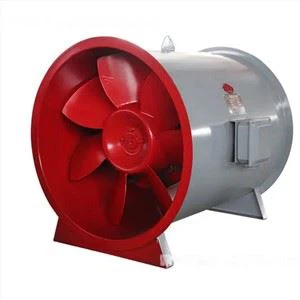
As a mine ventilation blower supplier who’s worked with large-scale mining operations across three continents, I’ve learned there’s no one-size-fits-all approach to arranging multiple ventilation systems for huge mines—especially when those sites span several square kilometers, feature deep underground tunnels, and have variable ore extraction zones that shift over time. I’ve spent years walking the tunnels of gold mines in Western Australia, copper mines in Chile, and coal mines in Appalachia, troubleshooting fan setups that failed because engineers treated ventilation as a “install one big fan” problem instead of a dynamic, zone-dependent system. If your mine has multiple working sections, varying gas levels, and seasonal shifts in air demand, arranging your blowers correctly is non-negotiable for worker safety, regulatory compliance, and operational efficiency. Let’s break down how to do it right, drawing on lessons from real mines I’ve supported.
First, start with mapping your mine’s core ventilation needs before you pick any blowers. Large-scale mines aren’t uniform: a deep hard-rock mine might have a main access shaft, two active production panels, a decline for personnel, and a remote maintenance area where gas levels spike at certain times of day. In my experience, the biggest mistake new mine operators make is sizing their fan array for peak demand without accounting for “normal” operation—like when only one production panel is active during a shift. For example, a copper mine I worked on in northern Chile was originally fitted with three 100,000 m³/h blowers for all zones, but when only one panel ran overnight, the system was pulling too much air, causing drafts that disrupted dust control and wasted energy. Instead, audit your mine’s zones: split them into primary (active production), secondary (access, maintenance, standby), and emergency (escape ways) areas, then calculate air flow rates for each. This audit will tell you if you need parallel blowers, staged systems, or a mix of fan types—like pairing an explosion-proof axial flow fan for high-gas zones with energy-saving units for low-demand areas.


Next, decide between parallel or series arrangements for your main blowers, and pick the right type for each role. Parallel setups work when you need to split air across multiple zones; series works when you’re moving air through deep, long tunnels where one blower can’t generate enough pressure. Let’s start with parallel: this is ideal for mines with separate, geographically dispersed panels. I’ve seen gold mines use two parallel Counter Rotating Mining Fan units to split air between two production sections, which cuts down on energy use because each fan only needs to move air for its zone. Counter-rotating fans are great here because they eliminate the need for guide vanes (which cause air resistance) and handle variable flow rates better than standard axial fans—perfect when one panel is ramping up production and the other is idling. On the other hand, series arrangements are for deep mines: a coal mine I supported in West Virginia had a 2km decline tunnel where a single blower couldn’t push air all the way to the deepest panel, so we paired a main Exhaust Fan for Mining at the surface with a secondary staged fan 1km inside. This setup boosted pressure by 50% without overloading the surface fan, and we used a DK Series Counter-Rotating Main Ventilator Fan for the secondary unit because its robust design handles the high dust and moisture of deep tunnels.
Once you’ve chosen the arrangement, placement is make-or-break. I’ve seen blowers installed too close to mine entrances, where external weather (like heavy rain or extreme heat) disrupts air flow, or too deep, where maintenance is costly. For primary surface exhaust fans—whether axial or counter-rotating—place them at a minimum of 100 meters from any mine shaft entrance, and elevate them 2-3 meters above ground level to avoid drawing in ground-level dust or gases. For underground auxiliary blowers, stick them as close to the zone they serve as possible, but leave enough space for maintenance access: a 1.5m clearance around every side of the unit is non-negotiable, because mine equipment breaks down unexpectedly, and you don’t want to be pulling a 2-ton fan through a narrow tunnel at 2 a.m. when a gas sensor trips. In the Chilean copper mine, we initially installed an auxiliary fan 500m inside the tunnel, but when a pipe leaked hydraulic fluid, we had to shut down the entire ventilation system to move it—costing $200,000 in lost production. Moving it 100m closer to the panel fixed that, and we paired it with an Explosion-Proof Axial Flow Fan for Mine Ventilation-10,000-300,000 m³/h because the zone had high levels of methane from ore veins.
Then, add staging and redundancy to avoid downtime. Large-scale mines can’t afford ventilation outages—even a 30-minute shutdown is a safety risk and a financial hit. Staging means installing backup blowers that activate automatically if a primary unit fails. In the West Virginia coal mine, we staged two Mining Energy Saving Ventilation Fan units as backups, but set them to run at 70% speed during normal operation, only ramping up if the main fan trips. This cut energy use by 22% (a big win for a mine that runs 24/7) and ensured that if a primary blower failed, the backup could take over in 2 minutes—no manual adjustment needed. Redundancy also means matching fan sizes to your backup capacity: if your primary fans total 200,000 m³/h, your backups should add up to at least 150,000 m³/h to cover partial zone operation. I’ve seen mines try to cut costs by using smaller backups, and when a primary fan broke during a peak shift, they had to shut down half their production panels to avoid unsafe air levels.
Don’t ignore regulatory and operational data when finalizing your arrangement. Every country has strict standards for mine ventilation: the U.S. Mine Safety and Health Administration (MSHA), for example, requires that every active zone has at least 4 cubic meters of air per person per minute, and no more than 0.5% methane in working areas. We use fan data integration to track air flow, gas levels, and fan performance in real time, so if a panel’s air demand spikes during a blast, the system automatically adjusts the speed of the relevant blower. In Western Australia’s Boddington Gold Mine, which has a 15km underground network, we set up a network that connects five counter-rotating fans, with sensors that adjust each fan’s speed based on blast schedules and dust levels. That setup reduced fan energy use by 18% and cut methane alarm incidents by 32% in the first year.
Let’s wrap this up with a real example of a job we did last year for a large open-pit underground transition mine in Canada. The mine had two active underground panels, a surface decline, and a main open-pit zone, all with variable air demands. We arranged three parallel blowers: a main Exhaust Fan for Mining at the surface for the open-pit zone, two DK Series Counter-Rotating Main Ventilator Fan units in parallel for the underground panels, and two energy-saving axial fans as backups. We placed the surface fan 120 meters from the open-pit entrance to avoid dust, and the underground fans 800 meters inside the decline, with 2m clearance for maintenance. The system cut their ventilation energy costs by 21% and met all Canadian Mining Association safety standards for 12 straight months.
If you’re managing a large-scale mine and need help designing or arranging your ventilation blower array, our team has decades of experience working with sites of all sizes, from 100-worker gold mines to 1,000-worker copper operations. We can help you audit your zone needs, pick the right mix of fan types, and arrange them to balance safety, efficiency, and cost. Don’t wait until a ventilation issue causes a shutdown—reach out to our team to start planning your system today.
References
- Mine Safety and Health Administration (MSHA). (2022). Ventilation Standards for Underground Metal and Nonmetal Mines. U.S. Department of Labor.
- International Council on Mining and Metals (ICMM). (2021). Energy-Efficient Ventilation for Large-Scale Mining Operations. ICMM Sustainable Development Framework.
- Society for Mining, Metallurgy & Exploration (SME). (2020). Mine Ventilation Handbook (3rd Ed.). SME Press.
- Australian Mine Safety Association (AMSA). (2023). Counter-Rotating Fan Applications in Deep Underground Mines. AMSA Technical Bulletin.