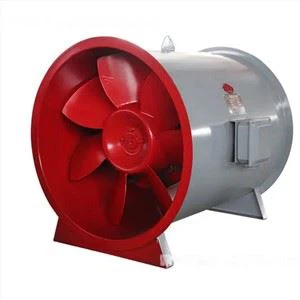
Hey there, let’s cut to the chase if you’re shopping for anti-corrosion fans—one of the biggest questions folks hit me with is humidity resistance. It makes total sense, right? If you’re using these fans in industrial spaces, marine setups, chemical plants, or even underground mines, high humidity isn’t just an inconvenience—it can eat through equipment faster than you can say “repair bill.” As someone who’s been supplying anti-corrosion fans for over a decade, I’ve seen way too many projects fall flat because teams skipped testing or misunderstood what humidity resistance actually means for these specific units.
First, let’s break down what humidity resistance in an anti-corrosion fan isn’t. It’s not just “can it run in damp air?” Basic fans might tolerate a little moisture, but anti-corrosion models are built for environments where humidity often climbs past 85% RH, sometimes with added chemical vapors (think salt, sulfur, or ammonia). Real humidity resistance here refers to how well the fan holds up against two key issues: surface corrosion from prolonged moisture exposure, and performance drop from moisture buildup on internal parts like blades, motors, and bearings.
Here’s a quick example I’ve lived: A few years back, a client in a coastal chemical plant bought a cheap anti-corrosion fan that claimed “high humidity resistance.” Within 6 months, the aluminum blades pitted from saltwater vapor, and the motor windings corroded because the seal was garbage. They ended up replacing it with one of our anti-corrosion axial flow fans that’s rated for continuous 95% RH with trace chemical exposure. Two years later, it’s still running—no pitting, no performance loss, no unscheduled downtime. That’s the difference between a marketing claim and actual tested humidity resistance.
So how do we (and I mean real suppliers, not the ones slapping a “corrosion-resistant” sticker on a regular fan) measure and build this resistance? It comes down to three core parts: material selection, coating quality, and structural sealing.
Let’s start with materials. Most anti-corrosion fans we supply use materials like FRP (Fiberglass Reinforced Plastic), marine-grade aluminum, or 316 stainless steel—none of which rust like carbon steel, which is what regular fans are made of. But humidity resistance isn’t just about the base material; it’s how it interacts with moisture. For example, 316 stainless is great for salt-laden humidity, but FRP actually holds up even better in environments where humidity mixes with mild acids, like a food processing plant with vinegar fumes. I’ve seen clients mix these materials too—FRP housings with marine aluminum blades—to balance cost and performance, which is a smart call if you don’t need the top-tier 316 for the entire unit.
Next up, coatings. Even the best material can fail if the coating is cheap. The humidity resistance of an anti-corrosion fan’s surface depends entirely on a coating that’s engineered to bond with the base material and block moisture. For FRP, we use a gel coat that’s UV-stabilized and water-resistant—not the flimsy paint that peels off after a few months. For metal components like motor housings, we apply a powder coating that’s tested in salt spray chambers for over 1,000 hours. That’s a standard industry test: if a fan passes 1,000 hours in a salt spray chamber (simulating high humidity and salt exposure), it can handle years of real-world use. Skip the 200-hour salt spray test, and you’re essentially buying a fan that’ll corrode the second you put it in a humid outdoor setup.
Then there’s sealing. Moisture loves to creep into gaps, and if it gets to the fan’s motor or bearings, that’s a death sentence. So good anti-corrosion fans have IP-rated sealing—usually IP55 or higher—for electrical components. IP55 means it’s dust-tight and can handle low-pressure water jets, which is exactly what you get in high-humidity environments. Some of the heavy-duty units we supply, like the ones used in underground flue gas exhaust systems (you can check out the details here: Ducted flue gas exhaust fan Fire fan), even have double-sealed bearings to keep moisture out of the moving parts that can’t handle corrosion. A lot of cheap fans cut corners here—they’ll put a single rubber seal that cracks after a year—so always ask about seal ratings if you’re shopping around.
Now, let’s talk about real-world performance, not just specs. A common misconception is that “higher RH rating = better humidity resistance.” But that’s only half the story. Humidity resistance also has to account for how long the fan runs in that humidity, and if there are chemicals mixed in. For example, a fan rated for 95% RH at 25°C might hold up, but if you’re running it 24/7 in a 40°C environment with 90% RH and mild ammonia (like a livestock farm), you need a fan tested for cyclic humidity and chemical exposure, not just static RH.
I had another client in a pulp and paper mill a couple years back—their old fan was failing because the humidity was so high it caused condensation on the blades, which would drip onto the motor, leading to shorts. The anti-corrosion fan we supplied had a sloped blade design that prevented condensation buildup, plus a heated motor housing to keep internal components above the dew point. That extra detail made all the difference—they haven’t had a single electrical issue in three years. That’s the stuff that marketing sheets don’t always tell you, but as a supplier, I walk clients through it every time.
So how do you actually test if an anti-corrosion fan’s humidity resistance is legit? If you’re working with a reputable supplier, they can provide test reports from third-party labs, like ASTM B117 for salt spray testing, or ISO 9227 for corrosion testing. If a supplier can’t show you those, run—they’re just selling a fan that’ll rust out. Also, ask for a warranty. We offer a 3-year warranty on our anti-corrosion fans, specifically for corrosion and humidity-related issues, because we stand behind the testing. A 1-year warranty that excludes corrosion? That’s a red flag.
Wait, let’s circle back to why this matters for your project. If you’re in a marine application, humidity is high and salt is present—so you need a fan that can handle both. If you’re in a chemical plant, humidity might be high plus corrosive vapors. If you’re in a HVAC system for a hospital, humidity control is key but you don’t want chemicals, but still need to avoid mold or corrosion. Every project’s humidity resistance needs are different, and that’s why one-size-fits-all fans don’t work.
I’ve had clients come to me after buying a cheap anti-corrosion fan, thinking it was the same as what we supply, just cheaper. The problem? They didn’t account for the fact that their workspace had 90% RH + sulfur fumes, and the cheap fan’s coating was only rated for 500 hours of salt spray. It’s not that the fan was bad—it was the wrong fan for the environment. As a supplier, my job isn’t to push the most expensive fan—it’s to match the humidity resistance to your actual conditions. That might mean a mid-tier FRP fan, or a high-grade 316 stainless fan, or something in between.
Another thing to note: humidity resistance doesn’t stop the fan from needing maintenance. Even the best anti-corrosion fan will last longer if you do basic checks—cleaning the blades occasionally, inspecting seals, checking for any small corrosion spots. But good humidity resistance means that maintenance is minimal, not a monthly chore of scrubbing rust off the housing.
So if you’re in the market for an anti-corrosion fan, don’t just look for the word “anti-corrosion” on the label. Dig into the details: what materials is it made of? What coating is used? What’s the seal rating? What test reports do you have? And most importantly, what’s the humidity and chemical conditions in your space? That’s how you get a fan that’ll hold up, not one that becomes a paperweight in 6 months.


If you’re ready to find a fan that’s built for your specific humidity needs, feel free to reach out. I’ve helped hundreds of clients across industries figure out exactly what they need, no sales pitch, just straight talk about humidity resistance and how to avoid costly mistakes. Don’t waste money on a fan that can’t handle your environment—let’s chat about what you’re working on.
References
- National Association of Corrosion Engineers (NACE). (2020). Corrosion Control in High-Humidity Industrial Environments. NACE International.
- ISO 9227:2019. Corrosion tests in artificial atmospheres – Salt spray tests. International Organization for Standardization.
- American Society of Heating, Refrigerating and Air-Conditioning Engineers (ASHRAE). (2021). HVAC Applications for Corrosive and High-Humidity Spaces. ASHRAE.
- ASTM B117-19. Standard Test Method for Salt Spray (Fog) Testing. ASTM International.
- Fiberglass Reinforced Plastic (FRP) Institute. (2022). FRP Materials for High-Humidity Chemical Processing Equipment. FRP Institute.