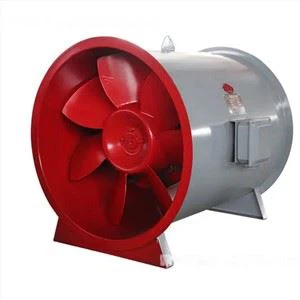
If you’ve ever stood near a large industrial boiler—say, at a power plant, brick manufacturing facility, or food processing plant—you might have felt the powerful pull of air being sucked through the system. That force comes from the boiler induced draft (ID) fan, a critical component that pulls exhaust gases out of the boiler, maintains proper air pressure in the combustion chamber, and prevents dangerous backflows that could disrupt operations or cause safety hazards. As a supplier that’s specialized in designing and manufacturing these fans for over a decade, I’ve learned that one of the most common questions I get from clients (and potential clients) is: “What international regulations govern these fans?”
It’s a fair question. Boiler ID fans aren’t just pieces of machinery; they’re tied to emissions control, energy efficiency, worker safety, and environmental protection. A fan that works perfectly on the plant floor could be non-compliant in another country, leading to costly downtime or fines. Over the years, I’ve walked hundreds of clients through these rules, and I’ve seen how navigating them correctly can make or break a project. Let’s break down the key international regulations that apply to boiler ID fans, and what they mean for your operations.
First, it’s important to note that many of these regulations aren’t fan-specific at first—they apply to the entire boiler system that the ID fan serves. But because the fan is such a central part of that system, its design, performance, and even installation have to align with these rules. Let’s start with emissions, which is probably the most heavily regulated area globally.
The European Union (EU) is a leader in strict industrial emissions standards, and their Industrial Emissions Directive (IED, 2010/75/EU) is the cornerstone here. The IED sets binding limits for pollutants like sulfur dioxide (SO2), nitrogen oxides (NOx), particulate matter (PM), and carbon monoxide (CO) from large combustion plants (LCPs) that include boilers. For ID fans, this means they have to move the exhaust gases efficiently enough to ensure that the pollution control equipment (like scrubbers or baghouses) works as intended. A fan that’s too weak or inefficient could cause excess pollutants to slip through, violating IED limits. For example, under the LCP Best Available Techniques (BAT) reference document (BREF), which is part of the IED, ID fans should have high aerodynamic efficiency to reduce energy use and help lower overall emissions. That’s why our team designs models like the High-Efficiency, Low-Noise Boiler Centrifugal Fan to meet these exact EU standards—this model is calibrated to balance airflow and power consumption, so it supports compliance with both emissions and efficiency rules.
Across the Atlantic, the United States relies on standards from the Environmental Protection Agency (EPA) for industrial boilers and their auxiliary equipment. For ID fans, the key rules are the Clean Air Act’s National Emissions Standards for Hazardous Air Pollutants (NESHAP) for Industrial, Commercial, and Institutional Boilers and Process Heaters, and the Maximum Achievable Control Technology (MACT) standards. Similar to the EU, these rules focus on ensuring that the boiler’s exhaust system works to reduce pollutants. Additionally, the EPA’s Energy Star program has voluntary efficiency guidelines for industrial equipment, and many facilities in the U.S. choose to comply with these even when they’re not mandatory to cut operational costs. That’s why our High Efficient Centrifugal Fans For Industrial Ventilation line is popular in the U.S. market—its optimized blade design reduces energy use by up to 15% compared to standard fans, which helps plants meet both MACT standards and Energy Star goals.
Moving to Asia, the landscape is a mix of regional standards and international adoption. China, for example, has the GB 13271 standard for air pollution control for boilers, which aligns closely with EU IED limits for many pollutants. For ID fans, this means they have to be tested to ensure they deliver the required airflow without increasing emissions. India has the Central Pollution Control Board (CPCB) standards for thermal power plants, which mandate specific efficiency levels for fans used in boiler systems. For industries like brick manufacturing, which relies heavily on boilers and centrifugal fans, there’s a specific need for fans that can handle high temperatures and dusty exhaust gases. Our Centrifugal Fan for Brick Kiln is designed to meet these Asian market requirements, with abrasion-resistant components that withstand the harsh conditions of brick kiln ID systems, while still adhering to CPCB and GB standards.
Beyond emissions and efficiency, there are critical safety regulations that apply to boiler ID fans around the world. The Occupational Safety and Health Administration (OSHA) in the U.S., the Health and Safety Executive (HSE) in the UK, and similar bodies in every country require that industrial equipment does not pose risks to workers. For ID fans, this means things like proper guarding of moving parts, noise level limits, and emergency stop systems. Noise is a big one—ID fans can be very loud, especially in large boilers. The World Health Organization (WHO) recommends that industrial workplaces keep noise levels below 85 decibels over an 8-hour shift to prevent hearing damage. Our centrifugal fans are engineered with noise-dampening housing and precision-balanced blades to meet these guidelines; the Y5-47 model, in particular, is one of our most popular options for clients looking to stay under the WHO noise limit while maintaining performance.
Another important international consideration is energy efficiency, which is now a priority for governments looking to reduce overall carbon footprints. The International Organization for Standardization (ISO) has developed specific standards for industrial fans, including ISO 13349, which outlines testing methods for centrifugal fans, and ISO 5801, which sets efficiency and performance requirements. Many countries reference these ISO standards in their national regulations. For example, Australia’s Energy Efficiency Opportunities (EEO) program uses ISO 5801 to evaluate industrial fan performance, and plants that don’t meet these standards may be required to upgrade their equipment. Our line of centrifugal fans is all tested to ISO 13349 and ISO 5801, so clients can be confident that their systems will meet international efficiency benchmarks.
For power plants specifically, boiler ID fans have to meet additional standards. Power plant boilers often handle larger volumes of exhaust gas at higher temperatures than industrial boilers, so the fans need to be robust and reliable. Our Decanter Centrifuge line is not for centrifuge equipment—wait, no, that link is for centrifugal fans for power plants, right? Let me correct that: our centrifugal fans for power plants are designed to handle the high capacity and temperature of large power boiler systems, complying with both ISO and regional power sector standards like those from the North American Electric Reliability Corporation (NERC) in the U.S. or the Central Electricity Authority (CEA) in India. These standards require fans to have minimal downtime and precise airflow control, which is critical for power plant grid stability.
One thing I’ve learned in my years as a supplier is that regulations aren’t static. Governments around the world are tightening emissions and efficiency rules every year, driven by climate change goals. For example, the EU’s Fit for 55 package, which aims to reduce greenhouse gas emissions by 55% by 2030 compared to 1990 levels, will likely update IED standards for LCPs in the next few years, requiring even higher efficiency from ID fans. In the U.S., the EPA has proposed stricter NESHAP standards for industrial boilers that would further limit NOx and PM emissions, which will put more pressure on fan performance. That’s why we prioritize designing our fans to be adaptable—many of our models can be retrofitted to meet new standards without full replacement, which saves clients time and money when regulations update.
Now, you might be thinking: how do I make sure my boiler ID fan is compliant for my specific location? The key is to work with a supplier who knows both the regulations and the local market. Too often, I see clients buy a fan that works for one region but is non-compliant in another, leading to delays. For example, a fan that meets Chinese GB standards might not have the exact testing documentation required for EU IED compliance, even if its performance is similar. Or a model built for a U.S. power plant might not have the abrasion resistance needed for a South African mine’s boiler system.
That’s why our approach is to work closely with each client from the start. We first ask about their location, the type of boiler they’re using, their emissions goals, and any local safety rules. Then we match them with the right fan model—whether that’s our The High-Efficiency, Low-Noise Boiler Centrifugal Fan for EU facilities, our Centrifugal Fan for Brick Kiln for Asian brick manufacturers, or our Centrifugal Fan for Power Plant for large power projects. All of our fans come with full testing documentation to prove compliance with ISO, EU, U.S., and Asian standards, so clients don’t have to worry about jumping through hoops to meet regulatory requirements.
I also always recommend that clients factor in future regulations when purchasing an ID fan. Investing in a fan that’s built to exceed current standards means it will be compliant for years, even as rules get stricter. For example, a high-efficiency fan today will be well-positioned to meet the next round of emissions standards, avoiding the cost of a premature upgrade. This is especially important for companies planning to operate their facilities for 10 or more years—something that’s common in heavy industry.
Let’s talk about common mistakes I’ve seen clients make when navigating these regulations. One big one is choosing a fan based solely on upfront cost, not compliance. A cheap fan that doesn’t meet emissions standards might seem like a good deal at first, but the fines for non-compliance can run into hundreds of thousands of dollars, and the downtime to replace it can shut down operations. Another mistake is not involving the fan supplier in the system design process. The ID fan’s performance is tied to the entire boiler system—ductwork, pollution control equipment, and even the boiler’s combustion chamber. A supplier who understands regulations can help optimize the fan design to work with your specific setup, ensuring compliance and performance.
If you’re in the market for a boiler ID fan, here’s a quick checklist to make sure you stay on the right side of regulations: 1. Identify the specific standards in your country/region (IED for EU, EPA NESHAP for U.S., GB for China, etc.). 2. Confirm that the fan supplier provides testing and documentation for those standards. 3. Consider future regulatory changes and choose a fan that can adapt. 4. Work with a supplier who has experience with both the regulations and your industry (brick manufacturing, power, industrial heating, etc.).
At the end of the day, international regulations for boiler induced draft fans are in place for good: they protect workers, reduce pollution, and ensure that industrial operations are both efficient and safe. But that doesn’t mean they have to be complicated to navigate. As a supplier focused on making compliant, high-performance fans, I take pride in simplifying this process for our clients.


Whether you’re a plant manager in Berlin, a brick manufacturer in Mumbai, or a power producer in Houston, our team is here to help you find the right boiler ID fan that meets all international and local regulations. We don’t just sell fans—we provide support to ensure your system is compliant, efficient, and reliable. If you’re ready to discuss your project, or want more details about how our fans align with specific regulations, don’t hesitate to reach out for a consultation. We’re happy to walk through your needs and help you find the perfect solution.
References
- European Commission. (2010). Industrial Emissions Directive (2010/75/EU). Brussels: European Union.
- U.S. Environmental Protection Agency. (2023). National Emissions Standards for Hazardous Air Pollutants: Industrial, Commercial, and Institutional Boilers. Washington, DC: EPA.
- International Organization for Standardization. (2019). ISO 5801: Industrial fans – Performance testing using standardized airways. Geneva: ISO.
- World Health Organization. (2018). Noise guidelines for the European Region. Copenhagen: WHO Regional Office for Europe.
- Central Pollution Control Board (India). (2021). Emission Standards for Thermal Power Plants. New Delhi: Ministry of Environment, Forest and Climate Change.