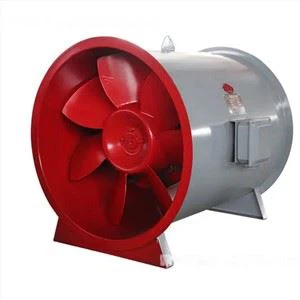
What is the wind direction control of a Subway Wind Fan?
As a supplier of subway wind fans, I've witnessed firsthand the critical role these fans play in maintaining a safe and comfortable environment within subway systems. The wind direction control of subway wind fans is a complex yet essential aspect of their operation, which directly impacts air quality, ventilation efficiency, and emergency response capabilities.
The Basics of Subway Wind Fan Wind Direction Control
Subway wind fans are designed to manage the airflow within subway tunnels and stations. The control of wind direction is crucial for several reasons. Firstly, it helps in distributing fresh air evenly throughout the subway network, ensuring that passengers and staff have access to clean and breathable air. Secondly, in case of emergencies such as fires, proper wind direction control can help in evacuating smoke and toxic gases, providing a clear path for safe evacuation.
There are two main types of subway wind fans: axial - flow fans and jet fans. Axial - flow fans are commonly used for general ventilation purposes, while jet fans are often employed to control the airflow direction and velocity in tunnels.
Axial - flow fans work by drawing air in parallel to the axis of the fan blades and then expelling it in the same direction. The wind direction of axial - flow fans can be controlled by adjusting the blade pitch or by using variable - speed drives. By changing the blade pitch, the angle at which the air is pushed can be altered, thus changing the wind direction. Variable - speed drives, on the other hand, can control the speed of the fan, which in turn affects the volume and direction of the airflow.
Jet fans, such as the SDS Series Explosion Proof Jet Fan For Tunnels, are installed along the tunnel walls. They work by creating a high - velocity jet of air that can be used to push or pull the air in a specific direction. The wind direction of jet fans is typically fixed during installation, but some advanced models allow for limited adjustment.
Importance of Wind Direction Control in Different Scenarios
Normal Operation
During normal subway operation, wind direction control is used to maintain a comfortable environment for passengers and staff. Fresh air is drawn into the stations and tunnels from the outside, and stale air is expelled. By controlling the wind direction, the ventilation system can ensure that the air is circulated efficiently, preventing the buildup of heat, humidity, and pollutants.
For example, in a large subway station, multiple axial - flow fans can be arranged in a specific pattern to create a cross - ventilation effect. This helps in removing odors, reducing the concentration of carbon dioxide, and maintaining a pleasant temperature.
Emergency Situations
In the event of a fire or other emergency, wind direction control becomes even more critical. The primary goal is to prevent the spread of smoke and toxic gases and to provide a clear path for evacuation.
In case of a fire in a tunnel, jet fans can be used to create a "smoke - free" zone by pushing the smoke away from the evacuation routes. The SDS High Temperature Axial Flow Smoke Exhaust Fan can be activated to exhaust the smoke from the tunnel. These fans are designed to operate at high temperatures for a certain period, ensuring that they can function effectively during a fire.
Advanced Wind Direction Control Technologies
With the advancement of technology, more sophisticated wind direction control systems are being developed for subway wind fans. These systems use sensors, controllers, and algorithms to optimize the airflow based on real - time conditions.
For example, some subway ventilation systems are equipped with air quality sensors that can detect the concentration of pollutants such as carbon monoxide, particulate matter, and volatile organic compounds. Based on the sensor data, the control system can adjust the wind direction and speed of the fans to maintain the air quality within acceptable limits.
Another advanced technology is the use of intelligent control algorithms. These algorithms take into account factors such as subway train schedules, passenger flow, and weather conditions to optimize the ventilation system. For instance, during peak hours when there are more passengers in the subway, the system can increase the airflow to ensure a comfortable environment.


Our Product Offerings
As a supplier, we offer a wide range of subway wind fans, including the Subway Wind Fan | SDS Tunnel Jet Fan for Metro and Underground Projects. Our fans are designed with the latest technology and high - quality materials to ensure reliable performance and long - term durability.
Our axial - flow fans feature adjustable blade pitch and variable - speed drives, allowing for precise control of the wind direction and airflow volume. Our jet fans are explosion - proof and can be customized to meet the specific requirements of different subway projects.
Conclusion
The wind direction control of subway wind fans is a vital aspect of subway ventilation systems. It plays a crucial role in maintaining air quality, ensuring passenger comfort, and responding to emergencies. With the continuous advancement of technology, we can expect even more efficient and intelligent wind direction control solutions in the future.
If you are involved in a subway project and are looking for high - quality subway wind fans, we would be delighted to discuss your requirements. Our team of experts can provide you with professional advice and customized solutions to meet your specific needs. Contact us today to start the procurement negotiation process and ensure that your subway project has a reliable and efficient ventilation system.
References
- ASHRAE Handbook - HVAC Systems and Equipment. American Society of Heating, Refrigerating and Air - Conditioning Engineers.
- NFPA 502: Standard for Road Tunnels, Bridges, and Other Limited Access Highways. National Fire Protection Association.
- CIBSE Guide B: Transportation. Chartered Institution of Building Services Engineers.