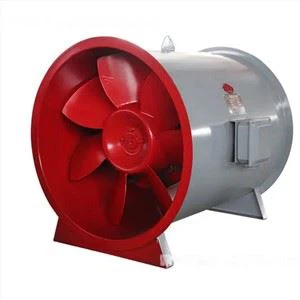
What is the static pressure of a Local Air Supply Fan?
As a supplier of Local Air Supply Fans, I've encountered numerous inquiries regarding the static pressure of these fans. Static pressure is a crucial parameter when it comes to understanding and selecting the right Local Air Supply Fan for various applications. In this blog post, I'll delve into what static pressure is, why it matters, and how it relates to our Local Air Supply Fans.
Understanding Static Pressure in Local Air Supply Fans
Static pressure, in the context of a Local Air Supply Fan, refers to the force exerted by the air within a system, which is perpendicular to the direction of air flow. It is measured in units such as pascals (Pa), inches of water column (in. wc), or millimeters of water column (mm wc). This pressure is generated by the fan as it moves air through a duct, ventilation system, or any other enclosed space.
To put it simply, static pressure is the resistance that the fan has to overcome to push air through the system. When air moves through a duct, it encounters various obstacles such as bends, filters, dampers, and changes in duct size. These obstacles create resistance, which in turn increases the static pressure. A fan with sufficient static pressure is required to ensure that air can be effectively delivered to the desired location.
Why Static Pressure Matters
The static pressure of a Local Air Supply Fan is a critical factor in determining its performance and suitability for a particular application. Here are some reasons why static pressure matters:
1. Airflow Delivery
A fan needs to overcome the static pressure in a system to deliver the required amount of airflow. If the static pressure is too high and the fan does not have enough pressure capabilities, the airflow will be restricted, and the system may not function as intended. For example, in a mining ventilation system, if the fan cannot overcome the static pressure created by long ducts and multiple bends, the air may not reach the working areas effectively, leading to poor air quality and potential safety hazards.
2. Energy Efficiency
Selecting a fan with the appropriate static pressure can improve energy efficiency. If a fan has too much static pressure for a given application, it will consume more energy than necessary. On the other hand, if the static pressure is too low, the fan may not be able to deliver the required airflow, and additional fans may need to be installed, increasing energy consumption. By choosing a fan with the right static pressure, you can ensure that the system operates efficiently and cost - effectively.
3. System Performance
The static pressure affects the overall performance of the ventilation system. It determines the distribution of air within the space, the ability to remove contaminants, and the comfort level of the occupants. In industrial settings, proper ventilation is essential for maintaining a safe and healthy working environment. A fan with the correct static pressure can help achieve these goals by ensuring that air is evenly distributed and contaminants are effectively removed.
Measuring Static Pressure
There are several methods for measuring the static pressure of a Local Air Supply Fan. One common method is to use a manometer. A manometer is a device that measures the difference in pressure between two points. To measure the static pressure of a fan, you can place the manometer at the inlet and outlet of the fan or at various points along the duct system.
Another method is to use pressure sensors. Pressure sensors can be installed in the duct system to continuously monitor the static pressure. This allows for real - time monitoring and adjustment of the fan operation to ensure optimal performance.
Static Pressure and Our Local Air Supply Fans
At our company, we offer a wide range of Local Air Supply Fans with different static pressure capabilities to meet the diverse needs of our customers. Our fans are designed to provide high - performance ventilation solutions for various industries, including mining, manufacturing, and commercial buildings.
For example, our Industrial Gold Mine Ventilation Axial Flow Fan is specifically designed for use in gold mines. It has a high static pressure capability, which allows it to overcome the resistance created by long ducts and complex mine layouts. This ensures that fresh air can be effectively delivered to the working areas, improving air quality and reducing the risk of accidents.
Our Kruger Ventilation Fan is another popular choice for mining applications. It is known for its reliability and efficiency, and it can provide the necessary static pressure to maintain proper ventilation in underground mines.
The Mine Auxiliary Ventilation Axial Flow Fan is also a great option for auxiliary ventilation in mines. It has a compact design and high static pressure performance, making it suitable for use in confined spaces.
Selecting the Right Static Pressure for Your Application
When selecting a Local Air Supply Fan, it is important to consider the static pressure requirements of your application. Here are some steps to help you choose the right static pressure:
1. Determine the System Resistance
Calculate the total resistance in the ventilation system. This includes the resistance created by the ductwork, filters, dampers, and any other components. You can use engineering calculations or consult with a ventilation expert to determine the system resistance.
2. Consider the Airflow Requirements
Determine the required airflow for your application. This will depend on factors such as the size of the space, the number of occupants, and the type of contaminants that need to be removed.
3. Choose a Fan with the Appropriate Static Pressure
Based on the system resistance and airflow requirements, select a fan with the appropriate static pressure. Our technical team can assist you in choosing the right fan for your specific needs.


Conclusion
In conclusion, static pressure is a crucial parameter when it comes to the performance and suitability of a Local Air Supply Fan. Understanding static pressure and its importance can help you make informed decisions when selecting a fan for your ventilation system. At our company, we are committed to providing high - quality Local Air Supply Fans with a wide range of static pressure capabilities to meet the diverse needs of our customers.
If you are in need of a Local Air Supply Fan for your project, we invite you to contact us for a detailed consultation. Our team of experts will work with you to understand your requirements and recommend the best fan solution for your application. We look forward to the opportunity to serve you and help you achieve optimal ventilation performance.
References
- ASHRAE Handbook - Fundamentals. American Society of Heating, Refrigerating and Air - Conditioning Engineers.
- Fan Engineering, 8th Edition. Buffalo Forge Company.
- Industrial Ventilation: A Manual of Recommended Practice. American Conference of Governmental Industrial Hygienists.