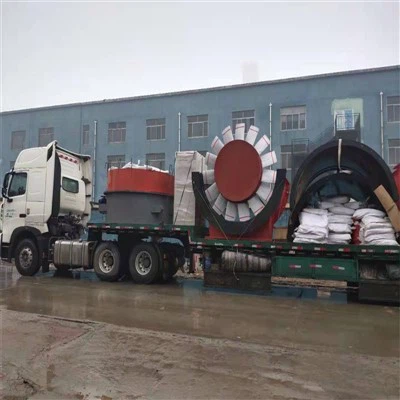
Hey there! As a supplier of mining fans, I often get asked about the power supply requirements for these essential pieces of equipment. So, I thought I'd share some insights on this topic to help you understand what it takes to keep your mining fans running smoothly.
First off, let's talk about why power supply is such a big deal for mining fans. Mining fans play a crucial role in ensuring proper ventilation in mines. They help to remove harmful gases, dust, and fumes, and maintain a safe and healthy working environment for miners. Without a reliable power supply, these fans won't be able to operate effectively, which can lead to serious safety issues.
Now, when it comes to the power supply requirements for mining fans, there are several factors to consider. The first and most obvious one is the size and type of the fan. Larger fans generally require more power to operate than smaller ones. For example, a Howden Axial Fan used in a large - scale mine might need a substantial amount of electrical power to generate the necessary airflow.
The type of fan also matters. Axial fans, which are commonly used in mines, work by moving air parallel to the axis of the fan blades. They can be quite energy - efficient, but their power requirements still depend on the volume of air they need to move and the pressure they need to overcome. On the other hand, centrifugal fans, which change the direction of the airflow, might have different power consumption patterns.
Another important factor is the operating conditions in the mine. Mines can be located in remote areas with limited access to a stable power grid. In such cases, alternative power sources like diesel generators might be used. However, diesel generators have their own set of challenges. They need regular maintenance, fuel supply, and can be noisy and polluting. So, if you're using a Low Noise Mining Fans, you might want to consider a more stable and clean power source if possible.
The altitude and temperature in the mine can also affect the power requirements of the fans. At higher altitudes, the air is thinner, which means the fan has to work harder to move the same volume of air. Similarly, extreme temperatures can impact the efficiency of the motor and other components of the fan, leading to increased power consumption.
Let's talk about the electrical specifications. Most mining fans are designed to operate on a specific voltage and frequency. In many parts of the world, the standard voltage for industrial applications is around 400V or 480V, with a frequency of 50Hz or 60Hz. It's crucial to make sure that the power supply you're providing matches the electrical requirements of the fan. Using the wrong voltage or frequency can damage the fan's motor and other components, and can also pose a safety risk.
In addition to the basic electrical requirements, you also need to consider the power factor. The power factor is a measure of how effectively the electrical power is being used by the fan. A low power factor means that more electrical power is being wasted, which can lead to higher energy costs. To improve the power factor, you might need to install power factor correction equipment.
Now, let's look at some of the options for powering mining fans. If you have access to a stable power grid, that's usually the most convenient and cost - effective option. However, as I mentioned earlier, not all mines are located in areas with easy access to the grid. In such cases, off - grid power solutions are becoming increasingly popular.


Solar power is one such option. Solar panels can be installed near the mine to generate electricity. The advantage of solar power is that it's a clean and renewable energy source. However, it does depend on sunlight availability, so you might need to have a battery storage system to ensure continuous power supply during cloudy days or at night.
Wind power is another alternative. Wind turbines can be used to generate electricity, especially in areas with consistent wind patterns. Like solar power, wind power is also clean and renewable, but it also has its limitations, such as the need for suitable wind conditions and the initial high cost of installation.
As a mining fan supplier, I understand that choosing the right power supply for your fans can be a complex decision. That's why we offer a range of Mine Axial Exhaust Fan models that are designed to be energy - efficient and can be powered by different sources. We can also provide you with expert advice on the best power supply options based on your specific mining conditions.
If you're in the market for mining fans and need help with understanding the power supply requirements or choosing the right fan for your needs, don't hesitate to reach out. Our team of experts is here to assist you every step of the way. Whether you're looking for a small - scale fan for a local mine or a large - scale solution for a major mining operation, we've got you covered.
In conclusion, the power supply requirement for a mining fan depends on various factors such as the size and type of the fan, operating conditions, and electrical specifications. By carefully considering these factors and choosing the right power source, you can ensure that your mining fans operate efficiently and safely. So, if you're ready to take the next step in improving your mine's ventilation system, get in touch with us today and let's start the conversation.
References
- General knowledge of mining fan technology and power systems in the mining industry.