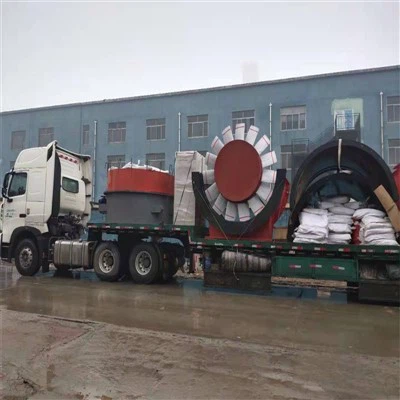
Hey there! As a supplier of Highway Tunnel Fans, I often get asked about the air - flow direction of these fans. It's a crucial topic, so let's dig right in.
Understanding the Basics of Highway Tunnel Fan Air - Flow
First off, we need to understand why air - flow direction matters in a highway tunnel. Tunnels are enclosed spaces where vehicles emit exhaust gases like carbon monoxide, nitrogen oxides, and particulate matter. If these pollutants aren't properly removed, they can pose serious health risks to drivers and passengers. Also, proper ventilation helps maintain good visibility inside the tunnel, which is essential for safe driving.
The air - flow direction in a highway tunnel can be broadly classified into two main types: longitudinal ventilation and transverse ventilation.
Longitudinal Ventilation
Longitudinal ventilation is the most common type used in highway tunnels. In this system, fans are installed along the length of the tunnel, and they blow air in a single direction, usually parallel to the traffic flow. The fans create a continuous flow of fresh air that pushes the polluted air out of the tunnel through the exit portals.
There are a couple of ways to achieve longitudinal ventilation. One is by using jet fans. Jet fans are small, high - velocity fans that are mounted on the tunnel ceiling. They work by creating a jet of air that accelerates the air flow in the tunnel. When the jet fans are turned on, they increase the air velocity, which helps in quickly removing the pollutants.
Another method is the use of axial fans. Axial fans are larger and can move a significant amount of air. They are often installed at the tunnel portals or in ventilation shafts. Axial fans draw in fresh air from outside the tunnel and blow it into the tunnel, creating a unidirectional air flow.
The advantage of longitudinal ventilation is its simplicity and cost - effectiveness. It requires less infrastructure compared to other ventilation systems. However, it may not be suitable for very long tunnels or tunnels with complex traffic patterns.
Transverse Ventilation
Transverse ventilation, on the other hand, involves the movement of air across the tunnel cross - section. In this system, fresh air is introduced through ducts located at the bottom or sides of the tunnel, and the polluted air is extracted through ducts at the top.
There are two subtypes of transverse ventilation: full - transverse and semi - transverse. In full - transverse ventilation, the air flow is completely perpendicular to the traffic flow. Fresh air is supplied through a plenum chamber at the bottom of the tunnel, and the polluted air is removed through an exhaust plenum at the top.
Semi - transverse ventilation is a combination of longitudinal and transverse ventilation. In this system, fresh air is supplied transversely, but the polluted air is removed longitudinally. This type of ventilation is often used in tunnels where there are specific requirements for air quality control.
Transverse ventilation provides better air quality control compared to longitudinal ventilation, especially in long tunnels or tunnels with high traffic volumes. However, it is more complex and expensive to install and maintain.


Factors Affecting Air - Flow Direction
Several factors can influence the air - flow direction in a highway tunnel. Traffic volume and speed are important factors. Higher traffic volumes mean more exhaust emissions, which require a stronger air flow to remove the pollutants. Also, the speed of the vehicles can affect the air flow. Fast - moving vehicles can create a piston effect, which can either assist or oppose the fan - induced air flow.
The tunnel's geometry also plays a role. Tunnels with curves, slopes, or changes in cross - section can disrupt the air flow. For example, a sharp curve in the tunnel can cause the air to swirl, which may reduce the effectiveness of the ventilation system.
External weather conditions can also impact the air - flow direction. Wind can either help or hinder the ventilation process. A strong headwind can oppose the air flow created by the fans, while a tailwind can assist it.
Our Product Offerings
As a supplier of Highway Tunnel Fans, we offer a wide range of products to meet different ventilation needs. We have Exhaust Fan Mining that are designed to handle the harsh conditions in tunnels. These fans are made of high - quality materials and are built to last.
Our Highway Tunnel Ventilator is another popular product. It is engineered to provide efficient and reliable ventilation in highway tunnels. Whether you need a longitudinal or transverse ventilation system, our ventilators can be customized to fit your requirements.
We also have Denitrification Fan that are specifically designed to remove nitrogen oxides from the tunnel air. These fans play a crucial role in maintaining good air quality and reducing the environmental impact of the tunnel.
Why Choose Our Fans
Our fans are designed with the latest technology to ensure optimal performance. We use advanced aerodynamic designs to maximize the air flow and minimize energy consumption. Our manufacturing process is highly quality - controlled, so you can be sure that you are getting a reliable product.
We also offer excellent after - sales service. Our team of experts is always ready to provide technical support and assistance. Whether you need help with installation, maintenance, or troubleshooting, we've got you covered.
Contact Us for Procurement
If you're in the market for highway tunnel fans, we'd love to hear from you. We understand that every tunnel project is unique, and we're committed to providing you with the best ventilation solution. Whether you're building a new tunnel or upgrading an existing one, our fans can help you achieve the desired air quality and safety standards.
Don't hesitate to reach out to us for a consultation. We'll work with you to understand your needs and recommend the most suitable fans for your project. Let's work together to create a safer and more comfortable environment in your highway tunnel.
References
- Wang, Y., & Li, X. (2018). Numerical simulation of air flow and pollutant dispersion in highway tunnels. Journal of Traffic and Transportation Engineering (English Edition), 5(2), 139 - 147.
- Zhang, H., & Chen, J. (2020). Research on the ventilation design of long highway tunnels. China Civil Engineering Journal, 53(11), 108 - 114.
- European Standard EN 12101 - 3:2015. Smoke and heat control systems - Part 3: Specification for powered smoke and heat exhaust ventilation systems.