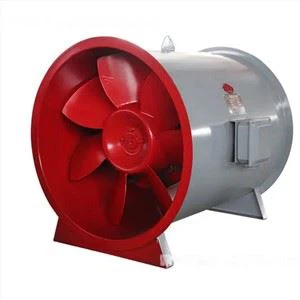
Ventilation is a critical aspect of working in confined spaces, ensuring the safety and well - being of workers by maintaining a healthy atmosphere. As a supplier of axial flow ventilators, I understand the importance of meeting the right ventilation requirements when using these devices in confined spaces. In this blog, I will delve into the key ventilation requirements for using an axial flow ventilator in a confined space and explain how our products can help meet these needs.
Understanding Confined Spaces
A confined space is defined as an area that is large enough for a person to enter and perform work, has limited or restricted means of entry or exit, and is not designed for continuous occupancy. Examples of confined spaces include storage tanks, sewers, silos, and mine shafts. These spaces often present unique hazards, such as the accumulation of toxic gases, lack of oxygen, and the potential for fire or explosion.
The Role of Axial Flow Ventilators in Confined Spaces
Axial flow ventilators are widely used in confined spaces due to their ability to move large volumes of air in a straight - line path. They work by using a propeller - like blade to draw air in and push it out in the same direction as the axis of the fan. This makes them ideal for providing ventilation in long, narrow spaces, such as tunnels or pipes, as well as for removing contaminants from the air.
Ventilation Requirements for Confined Spaces
Air Exchange Rate
One of the primary ventilation requirements for confined spaces is to achieve an adequate air exchange rate. The air exchange rate is the number of times the volume of air in a confined space is completely replaced within a given period. A higher air exchange rate helps to dilute and remove contaminants, such as dust, fumes, and gases, from the air.
The required air exchange rate depends on several factors, including the size of the confined space, the type of work being performed, and the nature of the contaminants present. For general industrial applications, a minimum air exchange rate of 6 - 10 air changes per hour is often recommended. However, in spaces where toxic or flammable gases are present, a higher air exchange rate may be required.
Our axial flow ventilators are designed to provide high - volume air movement, allowing for efficient air exchange in confined spaces. With a range of models available, we can offer ventilators that can meet different air exchange rate requirements, ensuring that the confined space remains safe for workers.
Oxygen Supply
Another crucial ventilation requirement is to maintain an adequate supply of oxygen in the confined space. The normal oxygen concentration in the air is approximately 20.9%. When the oxygen level drops below 19.5%, it is considered oxygen - deficient, which can lead to dizziness, nausea, and even loss of consciousness.


Axial flow ventilators can help to supply fresh air to the confined space, increasing the oxygen concentration. By continuously drawing in fresh air from the outside and expelling stale air, our ventilators ensure that the oxygen level in the confined space remains within the safe range.
Removal of Contaminants
Confined spaces can be contaminated with a variety of substances, including dust, fumes, and toxic gases. These contaminants can pose serious health risks to workers if not properly removed.
Axial flow ventilators are effective in removing contaminants from the air by creating a strong airflow. The high - velocity air stream generated by the ventilator can carry the contaminants out of the confined space and into the atmosphere. In addition, some of our axial flow ventilators can be equipped with filters to further remove particulate matter from the air, providing an extra layer of protection for workers.
Dilution of Flammable Gases
In some confined spaces, such as coal mines, there is a risk of flammable gases, such as methane, being present. To prevent the formation of explosive mixtures, it is essential to dilute the flammable gases to a safe level.
Axial flow ventilators can be used to dilute flammable gases by introducing large volumes of fresh air into the confined space. By continuously diluting the gas concentration, the risk of explosion is significantly reduced. Our Coal Mine Ventilation Fans | Explosion - Proof Axial Fans are specifically designed for use in hazardous environments, such as coal mines, and are equipped with explosion - proof features to ensure safe operation.
Factors Affecting Ventilation Performance
Space Geometry
The geometry of the confined space can have a significant impact on the ventilation performance of an axial flow ventilator. Irregularly shaped spaces or spaces with obstructions can create areas of poor airflow, known as dead zones. In these dead zones, contaminants may accumulate, reducing the effectiveness of the ventilation system.
When selecting an axial flow ventilator for a confined space, it is important to consider the space geometry and choose a ventilator that can provide uniform airflow throughout the space. Our technical team can assist in assessing the space geometry and recommending the most suitable ventilator model to ensure optimal ventilation performance.
Ducting
If ducting is used in the ventilation system, its design and installation can also affect the ventilation performance. Poorly designed or installed ducting can cause airflow restrictions, reducing the volume of air that can be moved by the ventilator.
We offer a range of ducting solutions that are compatible with our axial flow ventilators. Our ducting is designed to minimize airflow resistance and ensure efficient air movement. In addition, our installation services can ensure that the ducting is properly installed, maximizing the ventilation performance of the system.
How Our Axial Flow Ventilators Meet the Requirements
Our axial flow ventilators are designed and manufactured to meet the highest standards of quality and performance. We use advanced technology and high - quality materials to ensure that our ventilators are reliable, efficient, and durable.
High - Volume Air Movement
Our ventilators are capable of moving large volumes of air, allowing for rapid air exchange in confined spaces. This helps to meet the air exchange rate requirements and ensures that contaminants are quickly removed from the air.
Energy Efficiency
We understand the importance of energy efficiency, especially in large - scale ventilation applications. Our axial flow ventilators are designed to consume less energy while providing high - performance ventilation. This not only reduces operating costs but also helps to minimize the environmental impact.
Safety Features
Safety is our top priority. Our ventilators are equipped with a range of safety features, such as overload protection, thermal protection, and explosion - proof enclosures. These features ensure that the ventilators can operate safely in hazardous environments, protecting both the workers and the equipment.
Contact Us for Your Ventilation Needs
If you are in need of an axial flow ventilator for a confined space, we are here to help. Our team of experts can provide you with professional advice on selecting the right ventilator for your specific requirements. We offer a wide range of products, competitive pricing, and excellent after - sales service.
Whether you are working in a coal mine, a chemical plant, or any other confined space, our axial flow ventilators can provide the ventilation you need to ensure a safe and healthy working environment. Contact us today to discuss your ventilation requirements and start the procurement process.
References
- Occupational Safety and Health Administration (OSHA). "Confined Spaces."
- American Conference of Governmental Industrial Hygienists (ACGIH). "Threshold Limit Values for Chemical Substances and Physical Agents and Biological Exposure Indices."
- National Fire Protection Association (NFPA). "NFPA 5000: Building Construction and Safety Code."