How to design an intelligent control system for a submarine tunnel fan?
As a supplier of Submarine Tunnel Fans, I've witnessed firsthand the critical role these fans play in ensuring the safety and functionality of submarine tunnels. Designing an intelligent control system for these fans is a complex yet rewarding task that requires a deep understanding of the tunnel environment, fan technology, and control theory. In this blog, I'll share my insights on how to design an effective intelligent control system for submarine tunnel fans.
Understanding the Requirements
The first step in designing an intelligent control system is to understand the specific requirements of the submarine tunnel. Submarine tunnels are unique environments with high humidity, saltwater corrosion, and strict safety regulations. The fans need to be able to operate reliably in these harsh conditions and provide sufficient ventilation to remove pollutants and maintain air quality.
- Ventilation Requirements: The control system should be designed to meet the ventilation requirements of the tunnel, which are typically based on the traffic volume, tunnel length, and pollutant levels. For example, during peak traffic hours, the fans may need to operate at a higher speed to ensure adequate ventilation.
- Safety Regulations: Submarine tunnels are subject to strict safety regulations, and the control system must comply with these regulations. This includes features such as emergency stop buttons, fire protection, and backup power supplies.
- Environmental Conditions: The control system should be designed to withstand the harsh environmental conditions in the tunnel, such as high humidity, saltwater corrosion, and temperature variations. This may require the use of specialized materials and protective coatings.
Selecting the Right Fan Technology
The next step is to select the right fan technology for the submarine tunnel. There are several types of fans available, each with its own advantages and disadvantages.
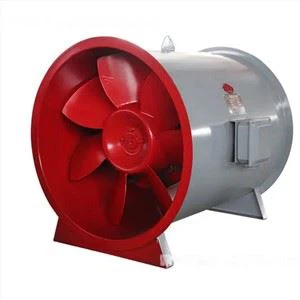
- Axial Fans: Axial fans are the most common type of fan used in submarine tunnels. They are efficient, reliable, and can provide high volumes of air at relatively low pressures. Axial fans are also available in a variety of sizes and configurations, making them suitable for different tunnel applications.
- Centrifugal Fans: Centrifugal fans are less common in submarine tunnels but can be used in applications where high pressures are required. They are more expensive than axial fans but can provide better performance in certain situations.
- Mixed-Flow Fans: Mixed-flow fans combine the features of axial and centrifugal fans and can provide a good balance between efficiency and pressure. They are a popular choice for submarine tunnels where both high volumes of air and high pressures are required.
When selecting the fan technology, it's important to consider factors such as the ventilation requirements, tunnel size, and environmental conditions. It's also important to choose a fan that is reliable, easy to maintain, and compatible with the control system.


Designing the Control System
Once the fan technology has been selected, the next step is to design the control system. The control system should be able to monitor the performance of the fans, adjust the fan speed based on the ventilation requirements, and provide real-time feedback to the operators.
- Sensor Selection: The control system should include sensors to monitor the performance of the fans, such as temperature sensors, pressure sensors, and flow sensors. These sensors can provide real-time data on the fan operation and help the control system make adjustments as needed.
- Control Algorithm: The control system should use a control algorithm to adjust the fan speed based on the ventilation requirements. This may involve using a proportional-integral-derivative (PID) controller or a more advanced control algorithm, such as a fuzzy logic controller.
- Communication Interface: The control system should have a communication interface to allow for remote monitoring and control. This may involve using a wired or wireless communication network, such as Ethernet, Wi-Fi, or cellular.
- Human-Machine Interface (HMI): The control system should include a human-machine interface (HMI) that allows the operators to monitor the performance of the fans, adjust the fan speed, and receive real-time feedback. The HMI should be easy to use and intuitive, with clear displays and controls.
Implementing the Control System
Once the control system has been designed, the next step is to implement it. This involves installing the sensors, controllers, and communication equipment in the tunnel and connecting them to the fans.
- Installation: The sensors, controllers, and communication equipment should be installed in accordance with the manufacturer's instructions and the relevant safety regulations. This may involve mounting the sensors on the fans or in the tunnel, running cables to the controllers, and configuring the communication network.
- Commissioning: Once the equipment has been installed, the control system should be commissioned to ensure that it is working properly. This involves testing the sensors, controllers, and communication equipment, and adjusting the control algorithm as needed.
- Training: The operators should be trained on how to use the control system and how to respond to any alarms or warnings. This may involve providing training sessions, user manuals, and online resources.
Monitoring and Maintenance
Once the control system has been implemented, it's important to monitor and maintain it on a regular basis. This involves checking the performance of the fans, the sensors, and the control system, and making any necessary adjustments or repairs.
- Performance Monitoring: The control system should be monitored on a regular basis to ensure that it is operating at peak performance. This may involve checking the fan speed, the air volume, the pressure, and the temperature.
- Sensor Calibration: The sensors should be calibrated on a regular basis to ensure that they are providing accurate data. This may involve using a calibration device or sending the sensors to a laboratory for calibration.
- Software Updates: The control system software should be updated on a regular basis to ensure that it is up-to-date and secure. This may involve downloading and installing software updates from the manufacturer's website.
- Maintenance Schedule: A maintenance schedule should be established for the fans, the sensors, and the control system. This may involve performing regular inspections, cleaning, and lubrication, and replacing any worn or damaged parts.
Conclusion
Designing an intelligent control system for a submarine tunnel fan is a complex yet rewarding task. By understanding the requirements of the tunnel, selecting the right fan technology, designing the control system, implementing it, and monitoring and maintaining it on a regular basis, you can ensure that the fans operate reliably and efficiently, providing adequate ventilation and ensuring the safety of the tunnel users.
If you're interested in learning more about our Submarine Tunnel Fans or our intelligent control systems, please visit our website at Highway Tunnel Ventilator, Denitrification Fan, or Ventilation Fan For Underground Mining Tunnel Construction. We'd be happy to discuss your specific requirements and provide you with a customized solution.
References
- Smith, J. (2018). Tunnel Ventilation Systems: Design, Operation, and Maintenance. New York: McGraw-Hill.
- Jones, R. (2019). Intelligent Control Systems for Industrial Applications. London: Elsevier.
- Brown, S. (2020). Fan Engineering: The Application of Air Movement and Control. Chicago: AMCA International.