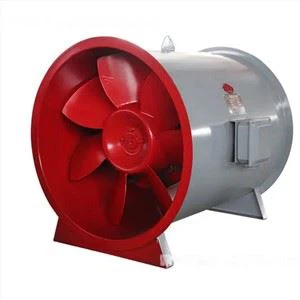
Can an axial flow ventilator be used in a chemical plant? This is a question that often arises in the industrial sector, especially when considering the safety and efficiency of ventilation systems in chemical plants. As a supplier of axial flow ventilators, I'd like to delve into this topic and provide a comprehensive analysis.
Understanding Axial Flow Ventilators
Axial flow ventilators are a type of fan that moves air parallel to the axis of the fan blades. They are known for their high flow rates and relatively low pressure capabilities. These ventilators work by drawing air in through the center of the fan and pushing it out in a straight line along the axis of the blades. They are commonly used in a variety of applications, including HVAC systems, industrial ventilation, and cooling processes.
The basic components of an axial flow ventilator include the fan blades, the motor, the housing, and the inlet and outlet sections. The design of the fan blades is crucial as it determines the efficiency and performance of the ventilator. Different blade designs can be optimized for specific applications, such as high flow or high pressure requirements.
Chemical Plant Environment and Requirements
Chemical plants are unique environments with specific ventilation requirements. These facilities often handle hazardous chemicals, gases, and vapors that can be toxic, flammable, or explosive. Therefore, ventilation systems in chemical plants must be designed to effectively remove these contaminants from the air and maintain a safe working environment.
One of the primary concerns in chemical plants is the prevention of the accumulation of hazardous substances. This requires a ventilation system that can provide sufficient air exchange rates to dilute and remove these substances from the workplace. Additionally, the ventilation system must be able to handle the corrosive nature of many chemicals, as well as the potential for explosive atmospheres.
Another important aspect is the need for reliable and continuous operation. Chemical processes are often continuous, and any interruption in the ventilation system can lead to serious safety risks. Therefore, the ventilation equipment must be robust, durable, and able to withstand the harsh conditions of the chemical plant environment.
Suitability of Axial Flow Ventilators in Chemical Plants
Axial flow ventilators can be a suitable choice for chemical plants under certain conditions. Here are some of the factors that make them a viable option:
High Flow Rates
Axial flow ventilators are capable of providing high flow rates, which is essential for effectively removing contaminants from large areas in chemical plants. They can quickly exchange the air in a room or a process area, reducing the concentration of hazardous substances and maintaining a safe working environment.
Energy Efficiency
Compared to some other types of ventilation systems, axial flow ventilators are generally more energy - efficient, especially when high flow rates are required. This can result in significant cost savings over the long term, which is an important consideration for chemical plant operators.
Space Saving
Axial flow ventilators have a relatively compact design, which makes them suitable for installation in areas where space is limited. In chemical plants, where floor space is often at a premium, this can be a significant advantage.
Customization
As a supplier, we can customize axial flow ventilators to meet the specific requirements of chemical plants. We can select materials that are resistant to corrosion and can design the ventilators to operate in explosive atmospheres. For example, we can use stainless steel or other corrosion - resistant materials for the fan blades and housing, and we can provide explosion - proof motors.
Challenges and Considerations
However, there are also some challenges and considerations when using axial flow ventilators in chemical plants:
Pressure Requirements
Axial flow ventilators typically have lower pressure capabilities compared to some other types of fans, such as centrifugal fans. In some chemical plant processes, higher pressures may be required to overcome ductwork resistance or to achieve proper air distribution. In such cases, a combination of axial flow and centrifugal fans may be necessary.
Corrosion Resistance
Although axial flow ventilators can be designed with corrosion - resistant materials, the continuous exposure to harsh chemicals can still pose a challenge. Regular maintenance and inspection are required to ensure the long - term performance and reliability of the ventilators.
Explosion - Proof Design
In chemical plants where explosive atmospheres are present, the axial flow ventilators must be designed to meet strict explosion - proof standards. This includes the use of explosion - proof motors, proper grounding, and the prevention of static electricity buildup.
Real - World Applications and Case Studies
There are many successful applications of axial flow ventilators in chemical plants. For example, in a large chemical manufacturing facility, axial flow ventilators were installed in the production areas to remove the fumes and gases generated during the chemical processes. The high flow rates of the ventilators effectively diluted the contaminants, and the custom - designed corrosion - resistant materials ensured the long - term durability of the equipment.
Another case involved a chemical storage facility. Axial flow ventilators were used to provide ventilation in the storage tanks area. The compact design of the ventilators allowed for easy installation in the limited space, and the energy - efficient operation reduced the overall operating costs.
Related Products for Specific Applications
If you are also interested in other related applications, we offer a range of axial flow ventilators suitable for different industries. For example, for coal mine ventilation, we have the Coal Mine Ventilation Fan | Explosion - Proof Axial Flow Fan for Underground Safety. These fans are specifically designed to meet the safety requirements of coal mines, providing reliable ventilation in underground environments.
Conclusion
In conclusion, axial flow ventilators can be used in chemical plants, but careful consideration must be given to the specific requirements of the facility. With proper design, material selection, and maintenance, axial flow ventilators can provide an effective and efficient ventilation solution for chemical plants. They offer high flow rates, energy efficiency, and space - saving advantages, while also being customizable to meet the unique challenges of the chemical plant environment.
If you are considering the installation of an axial flow ventilator in your chemical plant, I encourage you to contact us for a detailed consultation. Our team of experts can help you select the right ventilator for your specific needs and ensure that it is properly installed and maintained. We are committed to providing high - quality ventilation solutions that meet the safety and performance requirements of your chemical plant.


References
- Industrial Ventilation: A Manual of Recommended Practice, American Conference of Governmental Industrial Hygienists.
- Chemical Process Safety: Fundamentals with Applications, Daniel A. Crowl and Joseph F. Louvar.
- Ventilation for Control of Workplace Contaminants, National Institute for Occupational Safety and Health.