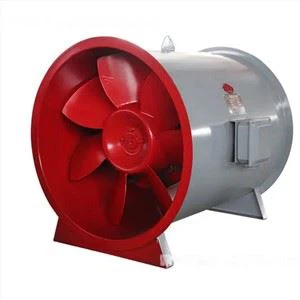
In the industrial and workshop settings, maintaining proper ventilation is not just a matter of comfort but a crucial factor in ensuring a safe and productive working environment. One of the most commonly used devices for this purpose is the workshop axial fan. As a seasoned supplier of workshop axial fans, I often get asked about the power consumption of these fans. Let's delve into this topic in detail.
Understanding the Basics of Workshop Axial Fans
Before we discuss power consumption, it's essential to understand what workshop axial fans are. These fans work on the principle of axial flow, where air moves parallel to the shaft about which the blades rotate. They are designed to provide high-volume, low-pressure airflow, making them ideal for large open spaces like workshops. Their simple design and efficient operation make them a popular choice for various industrial applications, such as ventilation, air circulation, and temperature control.
Factors Affecting Power Consumption
The power consumption of a workshop axial fan is influenced by several factors. Firstly, the size of the fan plays a significant role. Larger fans typically have more powerful motors and larger blades, which require more energy to operate. For example, a fan with a blade diameter of 36 inches will generally consume more power than a 24 - inch fan.
Secondly, the speed of the fan is directly related to its power usage. Most modern workshop axial fans come with variable speed settings. Running the fan at a higher speed will result in increased air movement but also a higher power draw. For instance, if you set the fan to its maximum speed, it will consume more electricity compared to when it is running at a lower speed.
The efficiency of the motor is another crucial factor. A high - efficiency motor converts a larger percentage of electrical energy into mechanical energy (the movement of the blades) and wastes less energy as heat. More advanced fans are equipped with energy - efficient motors, which can significantly reduce power consumption over time.
Lastly, the aerodynamics of the fan blades can affect how much power the fan uses. Blades that are designed to move air more efficiently will require less energy to achieve the same level of airflow.
Calculating Power Consumption
To calculate the power consumption of a workshop axial fan, you need to know its power rating (usually given in watts) and the amount of time it runs. The formula for calculating energy consumption is:
Energy (in kilowatt - hours, kWh) = Power (in kilowatts, kW) × Time (in hours)
For example, if a fan has a power rating of 500 watts (or 0.5 kW) and runs for 8 hours a day, the daily energy consumption would be 0.5 kW × 8 hours = 4 kWh.
To put this into perspective, the cost of electricity varies depending on your location. If the cost of electricity is $0.15 per kWh, then running the 500 - watt fan for 8 hours a day would cost 4 kWh × $0.15/kWh = $0.60 per day.
Comparison with Other Ventilation Options
When compared to some other ventilation options, workshop axial fans can be relatively energy - efficient. For example, compared to air - conditioning systems that are used for ventilation and temperature control, axial fans consume far less power. Air - conditioning units not only move air but also cool it, which requires a significant amount of energy.
On the other hand, compared to some smaller, less powerful fans, workshop axial fans may consume more power due to their larger size and higher capacity. However, they are able to move a much larger volume of air, which is often necessary in large workshop environments.
Importance of Energy - Efficient Fans
In today's cost - conscious and environmentally aware world, the power consumption of a workshop axial fan is a critical consideration. Energy - efficient fans can help reduce electricity bills, which is a significant cost for many industrial facilities. Additionally, by consuming less energy, these fans also have a lower carbon footprint, contributing to a more sustainable operation.
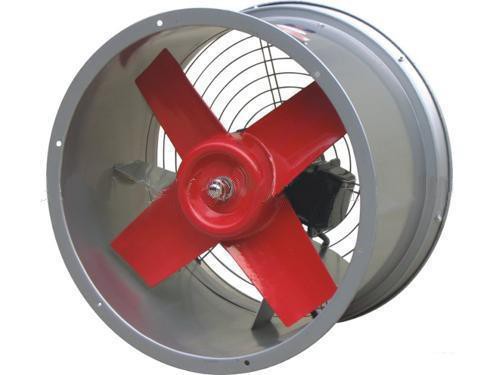
As a supplier of workshop axial fans, we offer a range of energy - efficient models. These fans are designed with advanced motor technology and aerodynamic blade designs to maximize airflow while minimizing power consumption. For example, our Wall Axial Fan series uses state - of - the - art motors that are engineered for high efficiency.

Real - World Examples and Case Studies
Let's take a look at a real - world example to illustrate the impact of power consumption. A medium - sized workshop was using traditional axial fans with a power rating of 750 watts each. They had six fans running continuously for 12 hours a day. The total daily power consumption of these fans was 750 watts × 6 fans × 12 hours = 54,000 watt - hours or 54 kWh. With an electricity cost of $0.15 per kWh, this resulted in a daily cost of $8.10 and a monthly cost of approximately $243.
After upgrading to our energy - efficient workshop axial fans with a power rating of 500 watts each, the new total daily power consumption became 500 watts × 6 fans × 12 hours = 36,000 watt - hours or 36 kWh. The daily cost dropped to $5.40, and the monthly cost decreased to about $162. This represents a significant cost savings over time.
Tips for Reducing Power Consumption
If you are using workshop axial fans, there are several ways to reduce their power consumption. Firstly, use the variable speed settings wisely. Only run the fans at the speed necessary to achieve the desired ventilation. For example, during periods of low activity in the workshop, you can reduce the fan speed.
Secondly, ensure proper maintenance of the fans. Clean the blades regularly to remove dust and debris, as a dirty fan has to work harder to move air. Also, check the motor and bearings for proper lubrication and alignment, as these can affect the fan's efficiency.
Conclusion
The power consumption of a workshop axial fan is influenced by multiple factors, including size, speed, motor efficiency, and blade design. By understanding these factors and choosing energy - efficient models, you can significantly reduce your electricity costs and contribute to a more sustainable operation.
As a leading supplier of workshop axial fans, we are committed to providing high - quality, energy - efficient products. Our fans are designed to meet the diverse needs of industrial workshops, from small to large - scale operations. If you are looking to upgrade your ventilation system or need advice on power - efficient fans, we are here to help. Contact us to discuss your requirements and explore our range of products. We look forward to assisting you in making the right choice for your workshop's ventilation needs.
References
- "Industrial Ventilation Handbook." McGraw - Hill Professional.
- "Energy - Efficient Fan Design." ASHRAE.