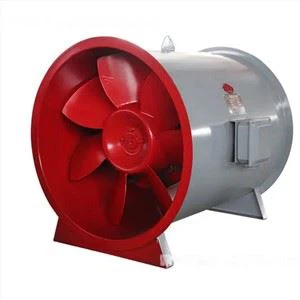
Hey there! As a supplier of Roof Axial Flow Fans, I often get asked about the air - flow direction of these nifty devices. So, let's dive right in and explore this topic.
First off, what's an axial flow fan? Well, it's a type of fan where the air moves parallel to the axis of the fan blades. Picture a propeller on an airplane, and you're on the right track. In the case of a roof axial flow fan, it's designed to be installed on the roof of a building, whether it's a small shed, a large warehouse, or an industrial factory.
The air - flow direction of a roof axial flow fan can be either intake or exhaust. When it's set up for intake, the fan pulls fresh air from the outside into the building. This is super useful in places where you need to bring in clean, oxygen - rich air, like in a greenhouse where plants need fresh air for photosynthesis. It can also be handy in offices where proper ventilation helps keep employees healthy and productive.
On the other hand, when the fan is configured for exhaust, it pushes the stale air from inside the building out to the outside. This is crucial in industrial settings where there might be fumes, dust, or heat that need to be removed. For example, in a factory where welding or painting is done, exhaust fans help get rid of the harmful chemicals and fumes.


Now, how do you determine which air - flow direction is right for your situation? It all boils down to your specific needs. If you're dealing with a space that has a lot of pollutants or heat build - up, an exhaust setup is probably your best bet. You can check out our Exhaust Fan Roof Air Vent Fan Manufacturer page to see the options we offer for this purpose.
If you're more concerned about bringing in fresh air, an intake setup is the way to go. Maybe you have a room with poor natural ventilation and you want to make sure there's a constant supply of fresh air. Our fans can be easily adjusted to work in intake mode.
Some people might wonder if it's possible to have both intake and exhaust fans working together. The answer is yes! In fact, it's a great idea in many cases. By having intake fans bring in fresh air and exhaust fans push out the old air, you create a balanced ventilation system. This helps maintain a stable indoor environment, with the right temperature and air quality.
Let's talk a bit about how the design of the fan affects the air - flow direction. The shape and angle of the fan blades play a huge role. Fan blades are carefully engineered to move air in a specific direction. If the blades are angled in one way, they'll pull air in, and if they're angled differently, they'll push air out.
The speed of the fan also impacts the air - flow. A faster - spinning fan will move more air, whether it's in intake or exhaust mode. But you have to be careful not to set the speed too high, as it can create too much noise and might not be energy - efficient.
Another factor to consider is the size of the fan. A larger fan can move more air than a smaller one. So, if you have a big space to ventilate, you'll probably need a larger roof axial flow fan. Our Industrial Roof Ventilation Fan | Mushroom Air Extractor for Factories is a great option for large industrial spaces.
Now, if you're in a situation where you need to boost the air - flow in a duct, we've got you covered. Our Booster Fan Duct Booster Fan can be used to increase the air - flow within a duct system, whether it's for intake or exhaust.
Installing a roof axial flow fan isn't too difficult, but it's important to do it right. You need to make sure the fan is properly secured to the roof and that the ductwork is connected correctly. If you're not sure how to install it, our team of experts can provide you with guidance.
Maintenance is also key to keeping your fan working properly. Regularly cleaning the fan blades and checking the motor can prevent problems down the road. You should also make sure the fan is lubricated if it has moving parts that require it.
In conclusion, understanding the air - flow direction of a roof axial flow fan is essential for getting the most out of your ventilation system. Whether you need to bring in fresh air, get rid of stale air, or create a balanced ventilation setup, our fans can meet your needs.
If you're interested in purchasing a roof axial flow fan or have any questions about air - flow direction or ventilation in general, don't hesitate to get in touch. We're here to help you find the perfect solution for your space. Let's work together to create a well - ventilated environment!
References
- "Ventilation Systems Design Guide" by ASHRAE (American Society of Heating, Refrigerating and Air - Conditioning Engineers)
- "Industrial Ventilation: A Manual of Recommended Practice" by the American Conference of Governmental Industrial Hygienists