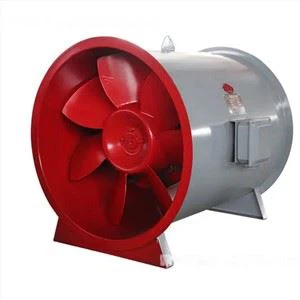
Hey there! I'm a supplier of axial flow ventilators, and today I wanna chat about the ventilation standards for a livestock barn when using an axial flow ventilator.
Why Good Ventilation in Livestock Barns Matters
First off, let's talk about why proper ventilation in livestock barns is so crucial. Livestock, whether it's cows, pigs, or chickens, produce a lot of moisture, heat, and harmful gases like ammonia and carbon dioxide. If these aren't removed effectively, it can lead to all sorts of problems.
Moisture buildup can create a damp environment that's perfect for the growth of mold and bacteria. This can cause respiratory diseases in the animals, which not only affects their health but also their growth and productivity. High levels of ammonia can irritate the animals' eyes, respiratory tracts, and skin, leading to reduced feed intake and weight gain. And excessive heat can cause heat stress, especially in hot weather, which can be fatal in severe cases.
So, having a good ventilation system is essential for maintaining a healthy and productive livestock environment. And that's where axial flow ventilators come in handy.
How Axial Flow Ventilators Work
Axial flow ventilators are pretty simple in their design and operation. They have a propeller-like blade that rotates around an axis, drawing air in axially (parallel to the axis of the fan) and pushing it out in the same direction. This creates a continuous flow of air through the livestock barn.
These ventilators are great for livestock barns because they can move a large volume of air at a relatively low pressure. They're also energy - efficient, which is important for long - term operation in a barn setting.
Ventilation Standards for Livestock Barns
Air Exchange Rate
One of the key ventilation standards is the air exchange rate. This refers to how many times the entire volume of air in the barn is replaced within a given period. The air exchange rate depends on several factors, including the type of livestock, the number of animals, and the climate.
For example, in a poultry house, the air exchange rate might need to be higher than in a dairy barn. Chickens produce a lot of moisture and ammonia, so you might need to aim for an air exchange rate of 10 - 20 times per hour during the summer months. In a dairy barn, an air exchange rate of 4 - 8 times per hour might be sufficient, especially in cooler weather.
Temperature and Humidity Control
Maintaining the right temperature and humidity levels is also crucial. Different livestock have different comfort zones. For pigs, the ideal temperature range might be between 18 - 22°C (64 - 72°F), while for chickens, it could be around 20 - 25°C (68 - 77°F).
Axial flow ventilators can help control temperature and humidity by bringing in fresh, cooler air and expelling warm, humid air. In hot weather, you might need to run the ventilators at a higher speed to increase the air exchange rate and keep the barn cool. In cold weather, you might need to balance ventilation with heat conservation to prevent the animals from getting too cold.
Ammonia and Gas Levels
Monitoring and controlling ammonia and other harmful gas levels is another important ventilation standard. Ammonia levels should be kept below 25 ppm (parts per million) in most livestock barns. High ammonia levels can cause respiratory problems and reduce the animals' immune function.
Axial flow ventilators can help reduce ammonia levels by diluting the gas with fresh air and expelling it from the barn. Regularly measuring ammonia levels using gas sensors can help you adjust the ventilation rate as needed.
Air Distribution
Proper air distribution within the barn is just as important as the air exchange rate. You don't want to have areas with stagnant air where moisture and gases can accumulate. Axial flow ventilators should be installed in a way that ensures even air distribution throughout the barn.
This might involve installing multiple ventilators at strategic locations, such as along the sidewalls or in the ceiling. You can also use baffles or air ducts to direct the airflow in the right direction.


Our Axial Flow Ventilators for Livestock Barns
As a supplier of axial flow ventilators, I can tell you that our products are designed to meet these ventilation standards. Our ventilators are made with high - quality materials, ensuring durability and long - term performance. They're also energy - efficient, which can save you money on your electricity bills in the long run.
We offer a range of sizes and models to suit different types and sizes of livestock barns. Whether you have a small family - run poultry farm or a large commercial dairy operation, we have a ventilator that can meet your needs.
And if you're in the coal mine ventilation business, check out our Coal Mine Ventilation Fans | Explosion - Proof Axial Fans. These fans are specially designed to meet the strict safety requirements of coal mines.
Contact Us for Your Ventilation Needs
If you're looking to improve the ventilation in your livestock barn, don't hesitate to get in touch. We can help you determine the right ventilation system for your specific situation, including the number and size of ventilators you'll need. Our team of experts can also provide installation and maintenance services to ensure that your ventilation system runs smoothly.
Whether you're building a new barn or upgrading an existing one, we're here to help you create a healthy and productive environment for your livestock. So, reach out to us today and let's start the conversation about your ventilation needs.
References
- ASABE Standards. (2018). Livestock and poultry housing environmental guidelines. American Society of Agricultural and Biological Engineers.
- National Pork Board. (2020). Ventilation management in swine facilities.
- Poultry Science Association. (2019). Ventilation best practices for poultry houses.