Hey there! As a supplier of axial flow ventilators, I've been getting a lot of questions lately about the performance requirements for these bad boys in a power plant. So, I thought I'd take a moment to break it down for you.
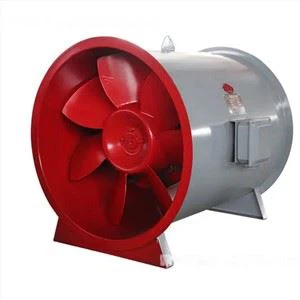
First off, let's talk about what an axial flow ventilator is. Simply put, it's a type of fan that moves air parallel to the axis of the fan blades. These ventilators are commonly used in power plants to provide ventilation, cooling, and exhaust functions. They're designed to handle large volumes of air at relatively low pressures, making them ideal for applications where high airflow rates are required.
Now, let's get into the nitty-gritty of the performance requirements for axial flow ventilators in a power plant. There are several key factors that need to be considered when selecting a ventilator for this type of application, including airflow rate, static pressure, efficiency, noise level, and reliability.
Airflow Rate
The airflow rate is one of the most important performance requirements for an axial flow ventilator in a power plant. It refers to the volume of air that the ventilator can move per unit of time, typically measured in cubic feet per minute (CFM) or cubic meters per hour (m³/h). The required airflow rate will depend on several factors, such as the size of the power plant, the type of equipment being cooled or ventilated, and the environmental conditions.
In general, power plants require high airflow rates to ensure proper ventilation and cooling. This is because power generation equipment, such as turbines and generators, generates a lot of heat during operation. If this heat is not removed efficiently, it can cause damage to the equipment and reduce its lifespan. Therefore, the axial flow ventilator needs to be able to move a sufficient amount of air to remove the heat and maintain a safe operating temperature.
Static Pressure
Static pressure is another critical performance requirement for axial flow ventilators in a power plant. It refers to the pressure difference between the inlet and outlet of the ventilator, which is required to overcome the resistance of the ductwork, filters, and other components in the ventilation system. The static pressure requirement will depend on the length and diameter of the ductwork, the number of bends and elbows, and the type of filters being used.
Power plants typically have complex ventilation systems with long duct runs and multiple components, which can create significant resistance to airflow. Therefore, the axial flow ventilator needs to be able to generate enough static pressure to overcome this resistance and ensure that the air is delivered to the desired locations. If the static pressure is too low, the airflow will be restricted, and the ventilation system may not function properly.
Efficiency
Efficiency is an important consideration when selecting an axial flow ventilator for a power plant. It refers to the ratio of the useful work done by the ventilator (i.e., moving air) to the energy input (i.e., electrical power). A more efficient ventilator will use less energy to move the same amount of air, which can result in significant cost savings over the life of the equipment.
In addition to cost savings, efficiency is also important for environmental reasons. Power plants are major consumers of energy, and reducing their energy consumption can help to reduce greenhouse gas emissions and mitigate the impact of climate change. Therefore, it's important to choose an axial flow ventilator that has a high efficiency rating.
Noise Level
Noise level is another factor that needs to be considered when selecting an axial flow ventilator for a power plant. Power plants are noisy environments, but excessive noise from the ventilation system can be a nuisance to workers and nearby residents. Therefore, the axial flow ventilator needs to be designed to operate quietly without sacrificing performance.


There are several ways to reduce the noise level of an axial flow ventilator, such as using low-noise fan blades, designing the fan housing to reduce vibration, and installing sound-absorbing materials in the ventilation system. When selecting a ventilator, it's important to consider the noise level requirements of the power plant and choose a model that meets these requirements.
Reliability
Reliability is perhaps the most important performance requirement for an axial flow ventilator in a power plant. Power plants operate 24/7, and any downtime can result in significant losses in production and revenue. Therefore, the axial flow ventilator needs to be able to operate reliably for long periods of time without requiring frequent maintenance or repairs.
To ensure reliability, it's important to choose an axial flow ventilator that is designed and manufactured to high standards. This includes using high-quality materials, precision manufacturing processes, and rigorous testing procedures. In addition, the ventilator should be equipped with features such as automatic shutdown and alarm systems to prevent damage in the event of a malfunction.
Our Axial Flow Ventilators
At our company, we understand the unique performance requirements for axial flow ventilators in a power plant. That's why we offer a wide range of high-quality ventilators that are designed to meet the specific needs of our customers. Our ventilators are available in a variety of sizes and configurations to accommodate different airflow rates and static pressure requirements.
One of our popular products is the Coal Mine Ventilation Fan Axial Flow Fan. This ventilator is specifically designed for use in coal mines, but it can also be used in power plants and other industrial applications. It features a high-efficiency design, low noise level, and reliable performance, making it an ideal choice for ventilation and cooling in harsh environments.
In addition to our standard products, we also offer custom-designed axial flow ventilators to meet the unique requirements of our customers. Our team of experienced engineers can work with you to design a ventilator that is tailored to your specific needs, ensuring optimal performance and efficiency.
Conclusion
In conclusion, the performance requirements for axial flow ventilators in a power plant are critical to ensure proper ventilation, cooling, and exhaust. When selecting a ventilator, it's important to consider factors such as airflow rate, static pressure, efficiency, noise level, and reliability. By choosing a high-quality ventilator that meets these requirements, you can ensure the safe and efficient operation of your power plant.
If you're in the market for an axial flow ventilator for your power plant, we'd love to hear from you. Our team of experts can help you select the right ventilator for your specific needs and provide you with a competitive quote. Contact us today to learn more!
References
- ASHRAE Handbook - Fundamentals. American Society of Heating, Refrigerating and Air-Conditioning Engineers.
- Power Plant Engineering. P.K. Nag.
- Industrial Ventilation: A Manual of Recommended Practice. American Conference of Governmental Industrial Hygienists.