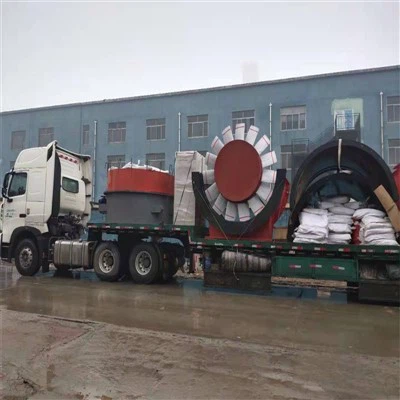
As a supplier of Submarine Tunnel Fans, I often receive inquiries about the installation requirements for diffusers in submarine tunnel fan systems. Diffusers play a crucial role in optimizing the performance of these systems, ensuring efficient air distribution and ventilation. In this blog post, I will delve into the key installation requirements for diffusers in submarine tunnel fan systems, providing valuable insights for engineers, contractors, and project managers involved in such projects.
Understanding the Role of Diffusers in Submarine Tunnel Fan Systems
Before discussing the installation requirements, it's essential to understand the function of diffusers in submarine tunnel fan systems. A diffuser is a device that gradually expands the cross-sectional area of the airflow, reducing its velocity and increasing its static pressure. In a submarine tunnel, diffusers are typically installed at the outlet of the tunnel fans to convert the high-velocity, low-pressure airflow generated by the fans into a lower-velocity, higher-pressure airflow. This helps to distribute the air more evenly throughout the tunnel, improving ventilation efficiency and reducing energy consumption.


Key Installation Requirements
1. Location and Orientation
The location and orientation of the diffuser are critical factors that can significantly impact its performance. The diffuser should be installed at the outlet of the tunnel fan, ensuring a smooth transition from the fan discharge to the diffuser inlet. It's important to align the diffuser properly with the fan outlet to minimize turbulence and pressure losses. Additionally, the diffuser should be oriented in a way that allows for optimal air distribution within the tunnel. For example, in a straight tunnel, the diffuser can be installed parallel to the tunnel axis to promote uniform airflow. In curved tunnels, the diffuser may need to be angled or curved to follow the tunnel's geometry and ensure effective air distribution.
2. Clearance and Accessibility
Adequate clearance around the diffuser is essential to ensure proper airflow and maintenance access. The diffuser should be installed with sufficient space around it to allow for unrestricted airflow expansion. This includes maintaining a minimum clearance distance between the diffuser and the tunnel walls, ceiling, and other obstructions. Additionally, the diffuser should be easily accessible for inspection, maintenance, and repair. This may require providing walkways, platforms, or access hatches near the diffuser to allow technicians to reach it safely.
3. Structural Support
Diffusers in submarine tunnel fan systems are often large and heavy, requiring robust structural support to ensure their stability and integrity. The diffuser should be installed on a sturdy foundation or support structure that can withstand the weight of the diffuser and the forces generated by the airflow. The support structure should be designed to prevent excessive vibrations and movements that could affect the diffuser's performance or cause damage to the tunnel infrastructure. In some cases, additional bracing or reinforcement may be required to ensure the structural stability of the diffuser.
4. Sealing and Leakage Prevention
Proper sealing of the diffuser is crucial to prevent air leakage and ensure efficient operation. The diffuser should be sealed at all joints and connections to prevent air from escaping into the surrounding environment. This may involve using gaskets, seals, or welding to create a tight seal between the diffuser components. Additionally, the diffuser should be inspected regularly for signs of leakage, and any leaks should be repaired promptly to maintain the system's performance.
5. Noise and Vibration Control
Submarine tunnel fan systems can generate significant noise and vibrations, which can be a concern for both the tunnel users and the surrounding environment. The diffuser should be designed and installed to minimize noise and vibration levels. This may involve using noise-absorbing materials, such as acoustic liners, inside the diffuser to reduce the noise generated by the airflow. Additionally, the diffuser should be properly supported and isolated from the tunnel structure to prevent the transmission of vibrations. For example, rubber mounts or isolators can be used to dampen vibrations and reduce noise transmission.
6. Compatibility with Other System Components
The diffuser should be compatible with other components of the submarine tunnel fan system, such as the fans, ductwork, and control systems. It's important to ensure that the diffuser's size, shape, and performance characteristics are compatible with the rest of the system to achieve optimal performance. For example, the diffuser's inlet and outlet dimensions should match the fan discharge and ductwork dimensions to ensure a proper fit. Additionally, the diffuser should be able to operate effectively within the range of airflow rates and pressures expected in the system.
Importance of Professional Installation
Installing a diffuser in a submarine tunnel fan system is a complex and specialized task that requires the expertise of professional engineers and contractors. Professional installation ensures that the diffuser is installed correctly, meeting all the necessary requirements and standards. It also helps to minimize the risk of installation errors, which can lead to performance issues, safety hazards, and costly repairs. When selecting an installation contractor, it's important to choose a company with experience in submarine tunnel ventilation systems and a proven track record of successful installations.
Related Products
As a supplier of Submarine Tunnel Fans, we offer a range of high-quality products that are suitable for various tunnel applications. Our Heavy Duty Construction Fan is designed for use in demanding construction environments, providing reliable and efficient ventilation. Our Exhaust Fan Mining is specifically designed for mining applications, offering excellent performance and durability. And our High pressure vulcanization fan is ideal for chemical and industrial applications, providing high-pressure airflow and corrosion resistance.
Conclusion
Installing a diffuser in a submarine tunnel fan system requires careful planning, attention to detail, and adherence to strict installation requirements. By considering factors such as location, orientation, clearance, structural support, sealing, noise and vibration control, and compatibility with other system components, you can ensure that the diffuser performs effectively and efficiently, providing optimal ventilation for the submarine tunnel. If you have any questions or need further information about diffusers or our Submarine Tunnel Fan products, please don't hesitate to contact us. We are here to help you with your ventilation needs and ensure the success of your project.
References
- "Tunnel Ventilation Design Manual," Transportation Research Board, National Academies Press.
- "Guidelines for Ventilation in Road Tunnels," International Tunnelling and Underground Space Association.
- "Handbook of Tunnel Ventilation," CRC Press.