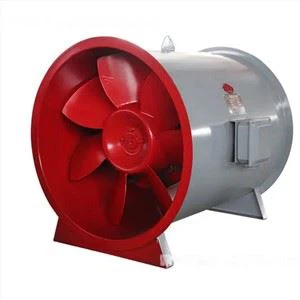
As a supplier of Wall Axial Fans, I've often been asked about the effectiveness of the air filters in these units. In this blog, I'll delve into the science behind air filters in wall axial fans, exploring their efficiency, limitations, and the factors that influence their performance.
Understanding Wall Axial Fans and Air Filters
Wall axial fans are a common type of ventilation equipment used in various settings, from industrial workshops to commercial buildings and even some residential applications. These fans work by drawing air in parallel to the axis of the fan blades and then expelling it in the same direction. They are known for their relatively simple design, high airflow capacity, and cost - effectiveness.
Air filters, on the other hand, are an additional component that can be integrated into wall axial fans. Their primary function is to remove contaminants from the air as it passes through the fan. These contaminants can include dust, pollen, smoke, and even some harmful microorganisms.
How Effective Are Air Filters in Wall Axial Fans?
Particle Removal Efficiency
One of the key measures of an air filter's effectiveness is its ability to remove particles of different sizes from the air. Most air filters used in wall axial fans are rated according to their Minimum Efficiency Reporting Value (MERV). The MERV rating system ranges from 1 to 20, with higher numbers indicating a greater ability to capture smaller particles.
For example, a MERV 8 filter can capture approximately 85% of particles in the size range of 3 - 10 microns. This makes it suitable for removing larger dust particles and some pollen. On the other hand, a MERV 13 filter can capture around 90% of particles in the 1 - 3 micron range, which includes smaller dust, mold spores, and some bacteria.
In a typical industrial or commercial environment, a filter with a MERV rating of 8 - 13 can significantly reduce the amount of visible dust in the air. However, for environments where there are very fine particles or airborne pathogens, a higher MERV rating may be required.
Airflow and Pressure Drop
While air filters are effective at removing particles, they also have an impact on the airflow of the wall axial fan. As air passes through the filter, it encounters resistance, which causes a pressure drop. This pressure drop can reduce the overall airflow of the fan.
The relationship between filter efficiency and pressure drop is a trade - off. Filters with higher MERV ratings generally have a higher pressure drop because they are more dense and have smaller pores to capture smaller particles. This means that if a very high - efficiency filter is installed in a wall axial fan, the fan may have to work harder to maintain the same airflow. In some cases, the reduced airflow can limit the effectiveness of the ventilation system.
Filter Lifespan and Maintenance
The effectiveness of an air filter in a wall axial fan also depends on its lifespan and the frequency of maintenance. Over time, as the filter captures more particles, it becomes clogged. A clogged filter not only reduces the airflow but also loses its ability to capture new particles effectively.
Regular maintenance, such as cleaning or replacing the filter, is essential to ensure the continued effectiveness of the air filter. The lifespan of a filter can vary depending on the environment in which the fan is operating. In a dusty industrial environment, a filter may need to be replaced every few weeks, while in a cleaner commercial or residential setting, it may last several months.
Factors Influencing the Effectiveness of Air Filters in Wall Axial Fans
Environmental Conditions
The environment in which the wall axial fan is installed plays a crucial role in the effectiveness of the air filter. In areas with high levels of dust, such as construction sites or mining operations, the filter will become clogged more quickly. Similarly, in environments with high humidity, the filter may be more prone to mold growth, which can reduce its efficiency.
Fan Design and Performance
The design and performance of the wall axial fan itself can also affect the effectiveness of the air filter. A fan with a higher static pressure rating is better able to overcome the pressure drop caused by the filter, allowing for a more efficient operation. Additionally, the placement of the filter within the fan housing can impact its performance. If the filter is not properly sealed or if there are air bypasses around the filter, some unfiltered air may still enter the ventilation system.
Filter Type and Quality
There are different types of air filters available for wall axial fans, including fiberglass filters, pleated filters, and HEPA (High - Efficiency Particulate Air) filters. Each type has its own advantages and disadvantages in terms of efficiency, cost, and lifespan.
High - quality filters are generally more effective at capturing particles and have a longer lifespan. However, they also tend to be more expensive. When choosing a filter for a wall axial fan, it's important to consider the specific requirements of the application and balance the cost with the desired level of filtration.
Real - World Applications and Case Studies
In industrial workshops, wall axial fans with air filters are often used to improve the air quality and protect workers from harmful dust and fumes. For example, in a woodworking shop, a MERV 13 filter can effectively remove wood dust particles, which can be a health hazard if inhaled over a long period.
In commercial buildings, such as offices and retail stores, wall axial fans with air filters can help maintain a comfortable and healthy indoor environment. They can remove dust, pollen, and odors, improving the overall air quality for employees and customers.
Conclusion
The air filter in a wall axial fan can be an effective tool for improving air quality, but its effectiveness depends on several factors. The filter's particle removal efficiency, the impact on airflow, its lifespan, and the environmental conditions all play a role in determining how well it performs.
As a supplier of Wall Axial Fan, we understand the importance of providing high - quality fans with effective air filters. We offer a range of wall axial fans with different filter options to meet the specific needs of our customers.


If you're interested in learning more about our wall axial fans or need advice on choosing the right air filter for your application, we encourage you to contact us for a procurement discussion. Our team of experts is ready to assist you in making the best decision for your ventilation needs.
References
- ASHRAE (American Society of Heating, Refrigerating and Air - Conditioning Engineers). "Standard 52.2 - 2017: Method of Testing General Ventilation Air - Cleaning Devices for Removal Efficiency by Particle Size."
- "Air Filtration Handbook" by Klaus Willeke and E. Andrew Koutrakis.
- Manufacturer's technical specifications for wall axial fans and air filters.