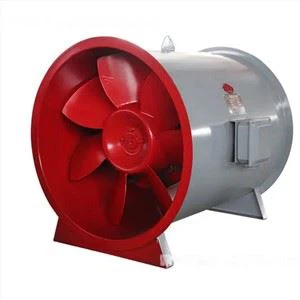
Hey there! As a supplier of Wall Axial Fans, I've seen firsthand how crucial the airflow of these fans is for effective ventilation. In this post, I'm gonna break down how the airflow of a wall axial fan affects ventilation and why it matters for your space.
First off, let's talk about what a wall axial fan is. A Wall Axial Fan is a type of fan that's designed to be mounted on a wall. It has blades that rotate around an axis, which creates airflow in a straight line. This type of fan is commonly used in industrial settings, workshops, warehouses, and even some commercial buildings.
Now, the airflow of a wall axial fan is measured in cubic feet per minute (CFM). This number tells you how much air the fan can move in one minute. The higher the CFM, the more air the fan can move, and the better it is at ventilating a space.
So, how does the airflow of a wall axial fan affect ventilation? Well, it all comes down to three main factors: air exchange, air circulation, and air quality.
Air Exchange
One of the primary functions of ventilation is to exchange the stale air inside a space with fresh air from outside. The airflow of a wall axial fan plays a crucial role in this process. When the fan is turned on, it pulls in fresh air from outside and pushes out the stale air inside. The higher the CFM of the fan, the more air it can exchange in a given amount of time.
For example, let's say you have a small workshop that's 1,000 square feet in size. The recommended air exchange rate for a workshop is about 6 to 8 air changes per hour. This means that the entire volume of air in the workshop should be replaced with fresh air 6 to 8 times per hour. To achieve this, you'll need a wall axial fan with a CFM rating that's appropriate for the size of your space.
If you have a fan with a low CFM, it won't be able to exchange the air in the workshop quickly enough. This can lead to a buildup of pollutants, such as dust, fumes, and odors, which can be harmful to your health. On the other hand, if you have a fan with a high CFM, it can quickly and effectively exchange the air in the workshop, keeping the air fresh and clean.
Air Circulation
In addition to air exchange, the airflow of a wall axial fan also helps to improve air circulation inside a space. When the fan is turned on, it creates a constant flow of air that helps to distribute the heat and coolness evenly throughout the room. This can make the space more comfortable to work in, especially in hot or cold weather.
For example, let's say you have a large warehouse that's heated by a central heating system. Without proper air circulation, the heat can accumulate near the ceiling, leaving the lower levels of the warehouse cold. By installing a wall axial fan, you can create a flow of air that helps to distribute the heat evenly throughout the warehouse, making it more comfortable for your employees.
Similarly, in the summer, a wall axial fan can help to circulate the cool air from an air conditioning system, making the space more comfortable and reducing your energy costs.
Air Quality
Finally, the airflow of a wall axial fan can also have a significant impact on the air quality inside a space. When the fan is turned on, it helps to remove pollutants, such as dust, fumes, and odors, from the air. This can improve the health and well-being of the people who work or live in the space.


For example, let's say you have a manufacturing plant that produces a lot of dust and fumes. Without proper ventilation, these pollutants can accumulate in the air, leading to respiratory problems, allergies, and other health issues. By installing a wall axial fan, you can remove these pollutants from the air, improving the air quality and creating a healthier work environment.
In addition to removing pollutants, the airflow of a wall axial fan can also help to prevent the growth of mold and mildew. Mold and mildew thrive in damp, stagnant air, so by creating a constant flow of air, you can keep the air dry and prevent these harmful fungi from growing.
Choosing the Right Wall Axial Fan
Now that you understand how the airflow of a wall axial fan affects ventilation, you're probably wondering how to choose the right fan for your space. Here are a few things to consider:
- Size of the space: The size of the space you need to ventilate will determine the CFM rating you need. As a general rule, you'll need a fan with a CFM rating of at least 1 CFM per square foot of space.
- Type of pollutants: The type of pollutants you need to remove from the air will also affect your choice of fan. For example, if you're dealing with a lot of dust, you'll need a fan with a high CFM rating and a good filtration system.
- Noise level: Some wall axial fans can be quite noisy, especially if they have a high CFM rating. If noise is a concern, look for a fan that's designed to operate quietly.
- Energy efficiency: Finally, you'll want to choose a fan that's energy-efficient. Look for a fan with a high Energy Star rating, which means it meets strict energy efficiency guidelines set by the U.S. Environmental Protection Agency.
Conclusion
In conclusion, the airflow of a wall axial fan plays a crucial role in ventilation. It helps to exchange the stale air inside a space with fresh air from outside, improve air circulation, and remove pollutants from the air. By choosing the right wall axial fan for your space, you can create a healthier, more comfortable, and more productive environment.
If you're interested in learning more about our Wall Axial Fans or need help choosing the right fan for your space, please don't hesitate to contact us. We're here to help you find the perfect ventilation solution for your needs.
References
- "Ventilation Basics." Occupational Safety and Health Administration.
- "Airflow and Ventilation." Energy Star.