Hey there! I'm a supplier of axial flow ventilators, and today I'm going to break down how these nifty machines work in a ventilation system. Axial flow ventilators are pretty common in all sorts of places, from industrial sites to commercial buildings, and even in some residential setups. So, let's dive right in!
The Basics of Axial Flow Ventilators
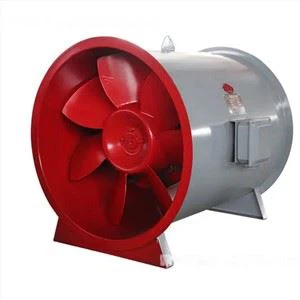
First off, what exactly is an axial flow ventilator? Well, it's a type of fan that moves air in a straight line, parallel to the axis of the fan's rotation. Picture a propeller on an airplane - that's kind of how an axial flow ventilator works. The blades of the fan spin around an axis, creating a force that pulls air in from one side and pushes it out the other.
These ventilators are made up of a few key components. There's the motor, which provides the power to spin the blades. Then there are the blades themselves, which are designed in a specific shape to maximize the airflow. And finally, there's the housing, which encloses the motor and blades and helps direct the airflow in the right direction.
How They Work in a Ventilation System
Now, let's talk about how axial flow ventilators fit into a ventilation system. The main goal of any ventilation system is to control the air quality within a space. This could mean removing stale air, bringing in fresh air, or controlling temperature and humidity.


Axial flow ventilators play a crucial role in achieving these goals. They're often used to exhaust air from a space. For example, in a factory where there are fumes or dust particles, an axial flow ventilator can be installed to suck out the contaminated air and expel it outside. This helps keep the air inside the factory clean and safe for workers.
On the other hand, axial flow ventilators can also be used to supply fresh air. In a large commercial building, for instance, they can be used to bring in outdoor air and distribute it throughout the building. This helps maintain a comfortable and healthy environment for the occupants.
The Science Behind the Airflow
So, how exactly do these ventilators create airflow? It all comes down to the shape and design of the blades. The blades of an axial flow ventilator are curved, which creates a pressure difference as they spin. When the blades rotate, they push the air molecules in a specific direction, creating a flow of air.
The amount of airflow that an axial flow ventilator can produce depends on a few factors. One of the most important factors is the speed of the motor. The faster the motor spins the blades, the more air the ventilator can move. Another factor is the size and shape of the blades. Larger blades with a more efficient design can move more air than smaller, less efficient blades.
Applications in Different Industries
Axial flow ventilators are used in a wide range of industries. Let's take a look at some of the most common applications:
Industrial Applications
In the industrial sector, axial flow ventilators are used for a variety of purposes. They're often used in manufacturing plants to remove heat, fumes, and dust. For example, in a welding shop, an axial flow ventilator can be used to exhaust the welding fumes, which can be harmful if inhaled.
They're also used in power plants to cool equipment and remove hot air. In a coal-fired power plant, for instance, axial flow ventilators can be used to cool the boilers and turbines, which generate a lot of heat during operation.
Commercial Applications
In commercial buildings, axial flow ventilators are used to maintain a comfortable and healthy environment. They're often used in shopping malls, offices, and restaurants to supply fresh air and remove stale air. For example, in a restaurant kitchen, an axial flow ventilator can be used to exhaust the cooking odors and smoke.
Residential Applications
Even in residential settings, axial flow ventilators have their uses. They're commonly used in bathrooms and kitchens to remove moisture and odors. For example, in a bathroom, an axial flow ventilator can be installed on the ceiling to suck out the steam and prevent mold growth.
Coal Mine Ventilation Fans | Explosion-Proof Axial Fans
If you're in the coal mining industry, you might be interested in our Coal Mine Ventilation Fans | Explosion-Proof Axial Fans. These ventilators are specifically designed to meet the unique ventilation needs of coal mines. They're explosion-proof, which means they can safely operate in environments where there's a risk of gas explosions. They're also highly efficient, which helps reduce energy consumption and operating costs.
Why Choose Our Axial Flow Ventilators
As a supplier of axial flow ventilators, we take pride in offering high-quality products. Our ventilators are made from durable materials and are designed to last. They're also energy-efficient, which means you can save on your electricity bills in the long run.
We offer a wide range of axial flow ventilators to suit different needs and applications. Whether you're looking for a small ventilator for a residential bathroom or a large industrial ventilator for a factory, we've got you covered.
Contact Us for Purchase and Negotiation
If you're interested in purchasing our axial flow ventilators, we'd love to hear from you. We can provide you with detailed product information, pricing, and delivery options. You can reach out to us to start the negotiation process. We're committed to providing excellent customer service and ensuring that you get the best ventilation solution for your needs.
References
- Fundamentals of Airflow and Ventilation Systems, HVAC Handbook
- Industrial Ventilation: A Manual of Recommended Practice, American Conference of Governmental Industrial Hygienists