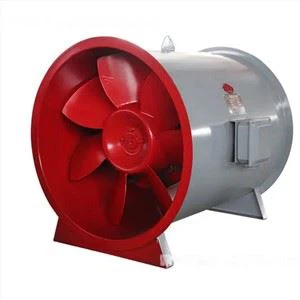
What is the noise level of a Material Conveying Fan?
As a supplier of Material Conveying Fans, I often receive inquiries from customers about the noise level of these fans. Noise is a critical factor, especially in industrial settings where excessive noise can not only cause discomfort to workers but also lead to long - term hearing damage and violate environmental noise regulations. In this blog, I will delve into the factors that influence the noise level of a Material Conveying Fan and provide some insights on how to manage it.
Factors Affecting the Noise Level of Material Conveying Fans
Fan Design
The design of a Material Conveying Fan plays a significant role in determining its noise level. For instance, the shape and number of fan blades can have a profound impact. Fans with a larger number of blades generally produce less noise because the airflow is more evenly distributed. Additionally, the aerodynamic design of the blades is crucial. Well - designed blades can reduce turbulence and thus lower the noise generated during the fan's operation.
Centrifugal fans, which are commonly used in material conveying applications, come in different types such as forward - curved, backward - curved, and radial blades. Backward - curved blades are known for their relatively lower noise levels compared to forward - curved blades. This is because backward - curved blades have a more efficient aerodynamic profile that minimizes the formation of eddies and reduces the impact of air on the blades, resulting in quieter operation.
Fan Speed
The speed at which a Material Conveying Fan operates is directly related to the noise it produces. Higher fan speeds typically lead to louder noise levels. This is because as the fan rotates faster, the air movement becomes more turbulent, and the impact of the air on the fan blades and the surrounding housing increases. When selecting a fan for a specific application, it is essential to balance the required airflow and pressure with the acceptable noise level. In some cases, a larger - sized fan operating at a lower speed may be a better choice than a smaller fan running at a high speed to achieve the same performance while reducing noise.
System Resistance
The resistance within the material conveying system also affects the noise level of the fan. A system with high resistance, such as a long and narrow duct or a clogged filter, forces the fan to work harder to maintain the required airflow. This increased workload can cause the fan to operate at a higher pressure and speed, leading to elevated noise levels. To minimize system resistance, proper duct design is necessary. Ducts should be sized appropriately, and bends and elbows should be kept to a minimum. Regular maintenance of filters and other components in the system is also important to ensure smooth air flow and reduce noise.


Measuring the Noise Level of Material Conveying Fans
The noise level of a fan is typically measured in decibels (dB). However, the perceived noise by humans is not only determined by the sound intensity but also by the frequency of the sound. A-weighted decibels (dBA) are commonly used to measure the noise level in a way that approximates the human ear's sensitivity to different frequencies.
When measuring the noise level of a Material Conveying Fan, it is important to take the measurements at a specific distance from the fan and in a standardized environment. This allows for accurate comparison between different fans and helps in determining whether the fan meets the required noise standards.
Strategies to Reduce the Noise Level of Material Conveying Fans
Acoustic Enclosures
One of the most effective ways to reduce the noise emitted by a Material Conveying Fan is to use acoustic enclosures. These enclosures are designed to absorb and dampen the sound waves generated by the fan. They are typically made of materials with good sound - absorbing properties, such as fiberglass or mineral wool. Acoustic enclosures can significantly reduce the noise level reaching the surrounding environment, making the workplace more comfortable and compliant with noise regulations.
Vibration Isolation
Vibration is another source of noise in fan systems. Fans can generate vibrations during operation, which can be transmitted to the surrounding structure and amplify the noise. To reduce vibration - related noise, vibration isolators can be installed between the fan and its mounting surface. These isolators are usually made of rubber or other elastic materials that can absorb the vibrations and prevent them from spreading.
Fan Selection and System Design
As mentioned earlier, careful selection of the fan type, size, and speed is crucial in reducing noise. Additionally, a well - designed material conveying system can minimize noise. This includes proper duct sizing, layout, and the use of low - resistance components. For example, using smooth - walled ducts and avoiding sharp bends can reduce air turbulence and noise.
Examples of Low - Noise Material Conveying Fans
At our company, we offer a range of low - noise Material Conveying Fans. One of our popular products is the 22 Kw Low Noise Backward Curve Turbo Blower Centrifugal Ventilator Fan. This fan features backward - curved blades, which are designed to provide efficient airflow with minimal noise. The advanced aerodynamic design of the blades reduces turbulence and ensures quiet operation, making it suitable for applications where noise is a concern.
We also have fans that are specifically designed for industrial ventilation and fire smoke exhaust. The The Role of Middle - Pressure Centrifugal Blowers in Industrial Ventilation provides effective ventilation while keeping the noise level under control. Similarly, the Building Fire Smoke Exhaust Fan is engineered to operate quietly during emergency situations, ensuring that it does not add to the chaos in the building.
Conclusion
The noise level of a Material Conveying Fan is influenced by various factors such as fan design, speed, and system resistance. Understanding these factors is essential for selecting the right fan and implementing effective noise - reduction strategies. By choosing the appropriate fan type, optimizing the system design, and using noise - reduction measures such as acoustic enclosures and vibration isolation, it is possible to achieve a quiet and efficient material conveying system.
If you are in the market for a Material Conveying Fan and are concerned about noise levels, we are here to help. Our team of experts can assist you in selecting the most suitable fan for your specific application and provide solutions to minimize noise. Contact us today to start a discussion about your requirements and explore our range of high - quality, low - noise fans.
References
- ASHRAE Handbook - HVAC Systems and Equipment. American Society of Heating, Refrigerating and Air - Conditioning Engineers.
- Fan Engineering: The Application, Analysis, and Design of Fans. Buffalo Forge Company.
- Industrial Ventilation: A Manual of Recommended Practice. American Conference of Governmental Industrial Hygienists.