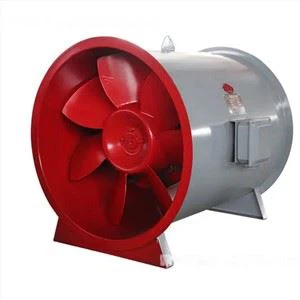
What is the maximum pressure a Material Conveying Fan can generate?
As a seasoned supplier of Material Conveying Fans, I've been asked countless times about the maximum pressure these fans can generate. It's a crucial question, especially for industries that rely on efficient material conveyance. In this blog, I'll delve into the factors influencing the maximum pressure of a Material Conveying Fan, and provide insights based on my years of experience in the field.
Understanding Material Conveying Fans
Material Conveying Fans are designed to move bulk materials such as grains, powders, and granules through a pipeline system. They play a vital role in various industries, including food processing, chemical manufacturing, and mining. The performance of these fans is typically measured by two key parameters: airflow and pressure. Airflow refers to the volume of air or material that the fan can move per unit of time, while pressure is the force required to move the air or material through the pipeline.
Factors Affecting Maximum Pressure
The maximum pressure a Material Conveying Fan can generate is influenced by several factors, including the fan design, the type of material being conveyed, and the system configuration.
Fan Design
The design of the fan is one of the most critical factors affecting its maximum pressure. There are two main types of Material Conveying Fans: centrifugal fans and axial fans. Centrifugal fans are the most commonly used type in material conveying applications due to their ability to generate high pressures. They work by accelerating the air or material radially outward using a rotating impeller. The shape and size of the impeller, as well as the number of blades, can significantly impact the fan's performance.
For example, a backward-curved impeller is known for its high efficiency and ability to generate relatively high pressures. This type of impeller is often used in industrial applications where energy efficiency is a priority. On the other hand, a forward-curved impeller can generate high airflow at lower pressures, making it suitable for applications where a large volume of material needs to be moved over a short distance.
Type of Material
The type of material being conveyed also plays a significant role in determining the maximum pressure required. Different materials have different properties, such as density, particle size, and abrasiveness, which can affect the flow resistance in the pipeline. For instance, conveying dense materials like metallic powders will require a higher pressure compared to conveying light materials like sawdust. Additionally, materials with large particles or high abrasiveness can cause more friction in the pipeline, increasing the pressure drop and requiring a more powerful fan.
System Configuration
The configuration of the material conveying system, including the length and diameter of the pipeline, the number of bends and valves, and the presence of filters or other equipment, can also impact the maximum pressure the fan needs to generate. Longer pipelines and more bends or valves will increase the resistance to flow, requiring a higher pressure to maintain the desired airflow. Similarly, the presence of filters or other equipment in the system can cause additional pressure drops, which need to be compensated for by the fan.
Real-World Examples
Let's take a look at some real-world examples of Material Conveying Fans and their maximum pressure capabilities. The 22 kW Industrial Turbo Blower – Low Noise is a highly efficient centrifugal fan designed for industrial material conveying applications. It is capable of generating a maximum pressure of up to [X] Pascals, making it suitable for conveying a wide range of materials over long distances.
Another example is the 4-72 Flue Gas Dust Removal Circulating Fan, which is specifically designed for dust removal and material conveying in flue gas systems. This fan can generate a maximum pressure of [Y] Pascals, allowing it to overcome the high resistance caused by the dust and gas in the system.
Calculating the Required Pressure
Determining the maximum pressure required for a specific material conveying application involves a detailed analysis of the system requirements. This typically includes calculating the pressure drop due to friction in the pipeline, the elevation change, and the pressure losses across any equipment in the system. Engineers often use sophisticated software tools to perform these calculations accurately.
It's important to note that selecting a fan with a maximum pressure rating that exceeds the calculated requirements is recommended to account for any variations in the system conditions or future expansions. However, over-sizing the fan can also lead to higher energy consumption and increased operating costs. Therefore, it's crucial to find the right balance between the required pressure and the fan's performance.
Importance of Choosing the Right Fan
Choosing the right Material Conveying Fan with the appropriate maximum pressure capability is essential for ensuring the efficient and reliable operation of the material conveying system. An undersized fan may not be able to generate enough pressure to move the material through the pipeline, resulting in blockages and reduced productivity. On the other hand, an oversized fan can waste energy and cause unnecessary wear and tear on the system components.
When selecting a fan, it's also important to consider other factors such as the fan's efficiency, reliability, and maintenance requirements. A high-efficiency fan can significantly reduce energy consumption and operating costs over the long term, while a reliable fan can minimize downtime and maintenance expenses.
Experience the Power of Centrifugal Fans
Our company offers a wide range of centrifugal fans for material conveying applications, including the Experience Centrifugal Fan For Your HVAC System. These fans are designed to provide high performance, energy efficiency, and reliable operation. With our expertise and experience in the industry, we can help you select the right fan for your specific application and ensure its proper installation and maintenance.
Contact Us for Your Material Conveying Fan Needs
If you're in the market for a Material Conveying Fan and need assistance in selecting the right one for your application, we're here to help. Our team of experienced engineers and sales representatives can provide you with detailed information about our products, perform system analyses, and offer customized solutions to meet your specific requirements.


Whether you're looking for a standard fan or a custom-designed solution, we have the expertise and resources to deliver the best results. Contact us today to start the discussion about your material conveying needs and let's work together to find the perfect fan for your system.
References
- "Fan Engineering: The System Approach" by the American Council of Industrial and Systems Engineers.
- "Handbook of Energy Efficiency and Renewable Energy" edited by Terry M. Rees.
- Various industry whitepapers and technical articles on material conveying and fan technology.