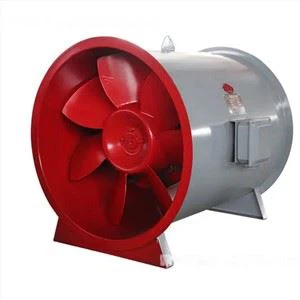
Hey there! I'm a supplier of anti-corrosion fans, and today I wanna chat about something super important: the installation angle requirement of an anti-corrosion fan.
Why Installation Angle Matters
First off, you might be wondering why the installation angle is such a big deal. Well, let me tell you, it can have a huge impact on how well the fan works. The right angle ensures efficient air movement, which means better ventilation and more effective corrosion prevention.
When a fan is installed at the wrong angle, it can cause all sorts of problems. For example, if it's tilted too much, the airflow might not be evenly distributed. This can lead to areas with poor ventilation, where moisture and corrosive substances can build up. Over time, this can damage the equipment and reduce its lifespan.
On the other hand, when the fan is installed at the correct angle, it can optimize the airflow pattern. This helps to remove moisture and corrosive gases from the environment, protecting the equipment and ensuring a safe and healthy working space.
Factors Affecting the Installation Angle
Now, let's talk about the factors that can affect the installation angle of an anti-corrosion fan. There are several things to consider, and getting these right is crucial for proper installation.
1. Fan Type
Different types of anti-corrosion fans have different installation angle requirements. For instance, axial flow fans are designed to move air parallel to the axis of the fan. These fans usually work best when installed horizontally or at a slight angle. The slight angle can help to direct the airflow in a specific direction, depending on the ventilation needs.
On the other hand, centrifugal fans are designed to move air perpendicular to the axis of the fan. These fans can be installed vertically or horizontally, depending on the application. Vertical installation is often used when space is limited, while horizontal installation can provide better airflow distribution in some cases.
2. Ventilation Requirements
The ventilation requirements of the space where the fan will be installed also play a big role in determining the installation angle. If the goal is to remove a large amount of moisture or corrosive gases, the fan might need to be installed at an angle that allows for maximum airflow.
For example, in a factory where there are high levels of corrosive fumes, the fan might need to be installed at a steeper angle to ensure that the fumes are effectively removed from the area. In a more enclosed space, such as a small storage room, a shallower angle might be sufficient.
3. Space Constraints
The available space for installation is another important factor. Sometimes, the layout of the room or the location of other equipment can limit the installation options. In these cases, you might need to get creative and find the best angle that fits within the available space.
For example, if there are pipes or other obstacles in the way, you might need to install the fan at a slightly different angle to avoid interference. However, it's important to make sure that the angle doesn't compromise the performance of the fan.
Recommended Installation Angles for Different Fan Types
Axial Flow Fans
As I mentioned earlier, axial flow fans are typically installed horizontally or at a slight angle. For most applications, an angle of 0 to 15 degrees from the horizontal is recommended. This slight angle can help to direct the airflow in a specific direction, which is useful for ventilation in large open spaces.
If you're looking for high-quality axial flow fans, check out our Best Mining Axial Flow Fans: Jk Series Overview for 2024. These fans are designed for optimal performance and can be installed at the recommended angles for efficient ventilation.
Centrifugal Fans
Centrifugal fans can be installed vertically or horizontally, depending on the application. When installed vertically, the fan can be used to exhaust air from the top of a room or a duct. This is useful for removing hot air or fumes that tend to rise.
When installed horizontally, the fan can provide a more even distribution of airflow across a larger area. In general, for horizontal installation, the fan should be level to ensure proper operation. For vertical installation, make sure that the fan is securely mounted to prevent any vibrations or movement.
If you're interested in a roof-mounted extract fan, we have a great option with a competitive price. Check out our Roof-Mounted Extract Fan Made in China with Competitive Price. This fan can be installed at the appropriate angle for effective ventilation.
Cooling Axial Fans
Cooling axial fans are often used to remove heat from equipment or to provide ventilation in areas where temperature control is important. These fans are usually installed horizontally or at a slight angle to ensure proper airflow.
For most cooling applications, an angle of 0 to 10 degrees from the horizontal is recommended. This helps to direct the cool air towards the equipment that needs to be cooled.
If you're in the market for a cooling axial fan, we're a leading manufacturer in China. Check out our Cooling Axial Fan Manufacturer China T30. Our fans are designed to provide efficient cooling and can be installed at the recommended angles for optimal performance.
Installation Tips
1. Read the Manual
Before installing any anti-corrosion fan, it's important to read the installation manual carefully. The manual will provide specific instructions and recommendations for the installation angle, as well as other important details such as mounting requirements and electrical connections.
2. Use the Right Tools
Make sure you have the right tools for the job. This includes a level to ensure that the fan is installed at the correct angle, as well as appropriate mounting hardware. Using the right tools will make the installation process easier and more accurate.
3. Check for Obstructions
Before installing the fan, check the area for any obstructions that might interfere with the airflow. This includes pipes, wires, or other equipment. Make sure that there is enough clearance around the fan to allow for proper airflow.
4. Test the Fan
Once the fan is installed, test it to make sure that it's working properly. Check the airflow direction and the speed of the fan. If you notice any issues, such as uneven airflow or unusual noises, adjust the installation angle or check for other problems.
Conclusion
In conclusion, the installation angle of an anti-corrosion fan is a critical factor that can affect its performance and lifespan. By considering the fan type, ventilation requirements, and space constraints, you can determine the best installation angle for your specific application.
If you have any questions or need more information about our anti-corrosion fans, feel free to reach out. We're here to help you find the right solution for your ventilation needs. Whether you're looking for an axial flow fan, a centrifugal fan, or a cooling axial fan, we have a wide range of options to choose from.
Don't hesitate to contact us if you're interested in purchasing our anti-corrosion fans. We're happy to discuss your requirements and provide you with a customized solution. Let's work together to ensure a safe and healthy working environment with our high-quality anti-corrosion fans.


References
- Fan Engineering Handbook
- Industry standards for anti-corrosion fan installation