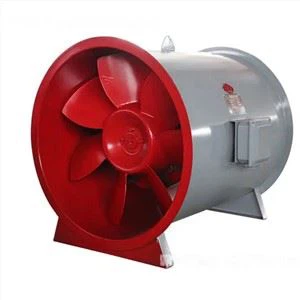
As a supplier of Workshop Axial Fans, I've seen firsthand how air flow uniformity can make or break the performance of these fans. In this blog, I'll dive into the nitty - gritty of what air flow uniformity is, why it matters for workshop axial fans, and how it impacts their overall performance.
What is Air Flow Uniformity?
Air flow uniformity refers to how evenly the air is distributed across the cross - section of the fan's outlet or within the workshop environment. When the air flow is uniform, it means that every part of the area being ventilated is getting a consistent amount of air. On the flip side, non - uniform air flow can lead to some areas getting too much air while others get too little.
Think of it like watering a garden. If you use a hose with a nozzle that sprays water unevenly, some parts of the garden will be over - watered, and others will be under - watered. The same principle applies to air flow in a workshop. A well - designed axial fan should provide a consistent and even stream of air to effectively ventilate the entire space.
Why Air Flow Uniformity Matters for Workshop Axial Fans
1. Efficient Ventilation
One of the main reasons we use axial fans in workshops is to remove pollutants, heat, and moisture from the air. If the air flow is not uniform, there will be pockets in the workshop where the air doesn't get properly circulated. This means that pollutants and heat can build up in those areas, leading to poor air quality and an uncomfortable working environment. For example, in a welding workshop, if the air flow is uneven, fumes from the welding process may not be effectively removed from certain corners, putting workers' health at risk.
2. Equipment Performance
Workshop equipment often generates a lot of heat. Axial fans are used to cool down this equipment and prevent overheating. When the air flow is uniform, all parts of the equipment receive an equal amount of cooling air. This helps to maintain the equipment's performance and extends its lifespan. On the other hand, non - uniform air flow can cause some parts of the equipment to overheat, leading to breakdowns and costly repairs.
3. Energy Efficiency
A fan that provides uniform air flow can operate more efficiently. When the air is distributed evenly, the fan doesn't have to work as hard to achieve the desired ventilation level. This means less energy consumption and lower electricity bills. In contrast, a fan with non - uniform air flow may need to run at a higher speed or for a longer time to achieve the same level of ventilation, resulting in increased energy costs.
How Air Flow Uniformity Affects the Performance of Workshop Axial Fans
1. Air Volume and Pressure
Uniform air flow ensures that the fan can deliver the rated air volume and pressure. If the air flow is uneven, the effective air volume may be reduced, as some of the air may be wasted in areas where it's not needed. This can lead to a decrease in the fan's overall performance. For example, if a fan is designed to deliver 10,000 cubic feet per minute (CFM) of air, but due to non - uniform air flow, only 8,000 CFM is effectively distributed, the ventilation efficiency is significantly reduced.
2. Noise Level
Non - uniform air flow can cause turbulence and uneven pressure distribution within the fan. This often results in increased noise levels. When the air is flowing smoothly and evenly, the fan operates more quietly. So, if you want a quiet working environment in your workshop, ensuring air flow uniformity is crucial.
3. Fan Lifespan
Uneven air flow can put additional stress on the fan's components. For instance, if one side of the fan blade is constantly exposed to higher air pressure due to non - uniform air flow, it can cause premature wear and tear. This can lead to a shorter lifespan for the fan and more frequent replacements.
Improving Air Flow Uniformity in Workshop Axial Fans
1. Proper Fan Placement
The location of the fan in the workshop is crucial for achieving uniform air flow. Fans should be placed in areas where they can effectively cover the entire workshop space. For example, if the workshop has a long and narrow layout, multiple fans may be needed and should be placed at regular intervals along the length of the workshop.
2. Duct Design
If your workshop uses ducts to direct the air flow, the design of the ducts plays a vital role in ensuring uniformity. Ducts should be properly sized and have smooth bends to minimize air resistance and ensure even air distribution.


3. Fan Selection
Choosing the right fan for your workshop is also important. Consider factors such as the size of the workshop, the type of pollutants or heat sources, and the required air volume. A well - sized and appropriately designed fan is more likely to provide uniform air flow.
Our Wall Axial Fan: A Solution for Uniform Air Flow
At our company, we offer a range of Wall Axial Fan that are designed to provide excellent air flow uniformity. Our fans are engineered with advanced blade designs and aerodynamics to ensure that the air is distributed evenly across the workshop. They are also built with high - quality materials to ensure durability and long - term performance.
If you're looking for a reliable workshop axial fan that can deliver uniform air flow and improve the performance of your workshop, we're here to help. Whether you need a single fan for a small workshop or a large - scale ventilation system for a big industrial space, we have the right solution for you.
Contact us today to discuss your specific requirements and get a quote. Our team of experts is ready to assist you in finding the perfect fan for your workshop.
References
- "Industrial Ventilation: A Manual of Recommended Practice", American Conference of Governmental Industrial Hygienists.
- "Axial Flow Fans: Design and Application", by R. J. Goldstein.