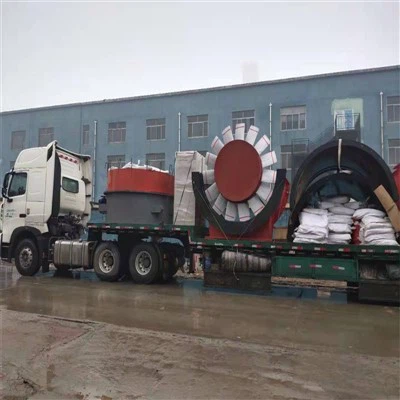
As a centrifugal fan supplier deeply involved in the power plant industry, I've witnessed firsthand the critical role that centrifugal fans play in the flue gas system of power plants. In this blog, I'll explore the essential requirements for a centrifugal fan in a power plant's flue gas system.
1. High - Efficiency Performance
Efficiency is of utmost importance in a power plant's flue gas system. A high - efficiency centrifugal fan can significantly reduce energy consumption. In power plants, where large volumes of flue gas need to be handled continuously, even a small increase in fan efficiency can lead to substantial cost savings over time.


The efficiency of a centrifugal fan is determined by its design, including the shape and size of the impeller, the inlet and outlet geometries, and the internal flow path. Advanced aerodynamic designs are employed to minimize flow losses, such as reducing turbulence and preventing flow separation. For example, modern impellers are often designed with backward - curved blades, which can achieve higher efficiencies compared to forward - curved or radial blades. These backward - curved blades help to convert the kinetic energy of the gas into pressure energy more effectively.
To ensure high - efficiency operation, the fan should also be properly sized for the specific requirements of the flue gas system. Oversized or undersized fans can lead to inefficient operation. An oversized fan may operate at a low load, resulting in poor efficiency and increased energy consumption. On the other hand, an undersized fan may not be able to handle the required volume of flue gas, leading to reduced system performance.
2. High - Temperature Resistance
The flue gas in a power plant can reach extremely high temperatures, depending on the type of fuel used and the combustion process. For example, in coal - fired power plants, the flue gas temperature can range from 120°C to 180°C, and in some cases, it can even exceed 200°C. Therefore, a centrifugal fan in a power plant's flue gas system must be able to withstand these high temperatures.
The materials used in the construction of the fan play a crucial role in its high - temperature resistance. The impeller, casing, and other components are typically made of heat - resistant alloys or special steels. These materials can maintain their mechanical properties at high temperatures, preventing deformation and ensuring the long - term reliability of the fan. Additionally, proper insulation and cooling systems may be installed to protect the motor and other sensitive components from the high - temperature flue gas.
3. Corrosion Resistance
Flue gas in power plants contains various corrosive substances, such as sulfur dioxide, nitrogen oxides, and acidic particulate matter. These substances can cause severe corrosion to the centrifugal fan, reducing its service life and performance. Therefore, corrosion resistance is another important requirement for a centrifugal fan in a power plant's flue gas system.
To enhance corrosion resistance, the fan can be coated with anti - corrosion materials. Epoxy coatings, for example, are commonly used to protect the metal surfaces of the fan from corrosion. These coatings form a protective barrier between the metal and the corrosive flue gas, preventing direct contact and reducing the rate of corrosion. In addition, the selection of corrosion - resistant materials for the fan components is also essential. Stainless steel is a popular choice due to its excellent corrosion resistance properties.
4. High - Pressure Capability
The flue gas system in a power plant often requires the centrifugal fan to generate a certain amount of pressure to overcome the resistance in the ducts, dust collectors, and other components of the system. The pressure requirement depends on the layout and complexity of the flue gas system. For a relatively simple system, the fan may need to generate a pressure of a few hundred pascals, while for a more complex system with long ducts and multiple components, the pressure requirement can be several thousand pascals.
The design of the fan impeller and casing is optimized to achieve the required high - pressure performance. The impeller is designed with a specific blade angle and shape to increase the pressure rise of the gas. The casing is also designed to guide the flow of the gas and convert the kinetic energy of the gas into pressure energy. Additionally, multi - stage centrifugal fans can be used in some cases to achieve higher pressures.
5. Low Noise Operation
Noise pollution is a significant concern in power plants. A centrifugal fan that operates with high noise levels can not only cause discomfort to the plant operators but also have a negative impact on the surrounding environment. Therefore, low noise operation is an important requirement for a centrifugal fan in a power plant's flue gas system.
Several measures can be taken to reduce the noise generated by the centrifugal fan. The design of the fan can be optimized to reduce aerodynamic noise. For example, the impeller can be designed with a smooth surface and a proper blade spacing to minimize the generation of turbulent flow, which is a major source of aerodynamic noise. Additionally, sound - absorbing materials can be installed on the fan casing and in the ducts to reduce the transmission of noise.
6. Reliability and Durability
Power plants operate continuously, and any breakdown of the centrifugal fan in the flue gas system can lead to significant production losses. Therefore, reliability and durability are crucial requirements for the fan.
The fan should be designed and manufactured with high - quality components and strict quality control standards. Regular maintenance and inspection are also necessary to ensure the long - term reliability of the fan. Components such as bearings, belts, and motors should be selected for their high - quality and long - service life. The fan should also be designed with easy - to - access inspection ports and maintenance points to facilitate maintenance work.
7. Compatibility with Dust Removal Systems
In power plants, dust removal is an important part of the flue gas treatment process. Centrifugal fans are often used in conjunction with dust removal systems, such as electrostatic precipitators or bag filters. Therefore, the centrifugal fan should be compatible with these dust removal systems.
The fan should be able to handle the dust - laden flue gas without being damaged by the dust particles. The impeller and casing should be designed to prevent the accumulation of dust, which can affect the performance of the fan. Additionally, the fan should be able to provide the required airflow and pressure for the proper operation of the dust removal system. For more information about dust removal air blowers, you can visit Dust Removal Air Blower.
8. Compatibility with Boiler Systems
Centrifugal fans are also closely related to the boiler systems in power plants. They are used for functions such as supplying combustion air and exhausting flue gas from the boiler. Therefore, the fan should be compatible with the boiler system in terms of airflow, pressure, and temperature requirements.
The fan should be able to provide the right amount of air for the combustion process in the boiler to ensure efficient and complete combustion. It should also be able to handle the high - temperature and high - pressure flue gas exhausted from the boiler. For a low - noise boiler exhaust fan, you can refer to Boiler Exhaust Fan With Low Noise Chinese Manufacturer. And for a boiler blower fan that can enhance efficiency and performance, check out Boiler Blower Fan: Enhancing Efficiency and Performance.
Conclusion
In conclusion, a centrifugal fan in a power plant's flue gas system needs to meet a variety of requirements, including high - efficiency performance, high - temperature resistance, corrosion resistance, high - pressure capability, low noise operation, reliability and durability, compatibility with dust removal systems, and compatibility with boiler systems. As a centrifugal fan supplier, we are committed to providing high - quality fans that meet these requirements. If you are interested in our centrifugal fans for power plant flue gas systems, please feel free to contact us for procurement and further discussions.
References
- ASHRAE Handbook - HVAC Systems and Equipment.
- Fan Engineering, 8th Edition.
- Standards and Guidelines for Power Plant Equipment Design and Operation.