Can a workshop axial fan be used in a corrosive environment?
As a seasoned supplier of workshop axial fans, I often encounter inquiries from clients regarding the suitability of our products in corrosive environments. This is a critical question, as the performance and longevity of fans can be significantly affected by corrosive substances. In this blog, I will delve into the factors to consider when using workshop axial fans in corrosive settings and offer insights on how to make the right choice.
Understanding Corrosive Environments
Corrosive environments are characterized by the presence of chemicals or substances that can cause deterioration of materials over time. These substances can include acids, alkalis, salts, and various industrial gases. Common examples of corrosive environments where workshop axial fans might be required include chemical processing plants, wastewater treatment facilities, and metal plating workshops.
The corrosive process occurs when the metal components of the fan come into contact with these aggressive substances. Oxidation and chemical reactions take place, leading to the formation of rust, pitting, and eventually structural failure. In addition to metal components, other materials such as plastics and coatings can also be affected by corrosion, which may compromise the overall functionality of the fan.
Challenges of Using Workshop Axial Fans in Corrosive Environments
When considering using a workshop axial fan in a corrosive environment, several challenges need to be addressed. Firstly, the fan's materials of construction must be resistant to corrosion. Standard fans made from ordinary steel or aluminum may not withstand the harsh conditions and can quickly deteriorate. This can lead to reduced airflow, increased energy consumption, and even complete fan failure.
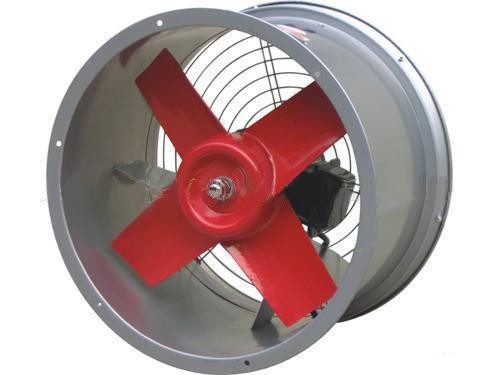

Secondly, the design of the fan should minimize the accumulation of corrosive substances. For example, smooth surfaces and proper drainage channels can prevent the pooling of liquids, which can accelerate the corrosion process. Additionally, the fan's motor and electrical components need to be protected from corrosion to ensure safe and reliable operation.
Another challenge is the maintenance and replacement of parts. In a corrosive environment, parts may need to be replaced more frequently, which can increase the overall cost of ownership. It is important to choose a fan that is easy to maintain and has readily available replacement parts.
Solutions for Using Workshop Axial Fans in Corrosive Environments
To overcome the challenges of using workshop axial fans in corrosive environments, several solutions are available. One option is to use fans made from corrosion-resistant materials. For example, stainless steel is a popular choice due to its high resistance to rust and corrosion. Fiberglass-reinforced plastic (FRP) is another excellent material, as it is lightweight, durable, and resistant to a wide range of chemicals.
Coatings can also be applied to the fan's surfaces to provide an additional layer of protection. Epoxy coatings, for example, can offer good resistance to acids and alkalis. Powder coatings are also commonly used, as they provide a smooth and durable finish that can prevent the penetration of corrosive substances.
In addition to using corrosion-resistant materials and coatings, proper installation and maintenance are crucial. The fan should be installed in a location that is protected from direct exposure to corrosive substances. Regular cleaning and inspection can help to identify and address any signs of corrosion early on.
Our Workshop Axial Fan Products for Corrosive Environments
At our company, we offer a range of workshop axial fans that are specifically designed for use in corrosive environments. Our Fire-Smoke Exhaust Axial Flow Fan HTC Model is constructed from high-quality stainless steel, which provides excellent resistance to corrosion. It is suitable for use in industrial settings where fire and smoke exhaust are required, even in corrosive conditions.
Our Wall Axial Fan is another popular choice for corrosive environments. It features a compact design and can be easily installed on walls. The fan is made from corrosion-resistant materials and is equipped with a high-performance motor to ensure reliable operation.
For large workshop factories, our High Quantity Roof Ventilation Fan For Workshop Factory is an ideal solution. It is designed to provide high-volume ventilation and is constructed from durable materials that can withstand the rigors of a corrosive environment.
Conclusion
In conclusion, while using a workshop axial fan in a corrosive environment presents challenges, it is possible with the right selection of materials, design, and maintenance. Our company is committed to providing high-quality workshop axial fans that are suitable for use in corrosive settings. If you are looking for a reliable fan for your corrosive environment, please do not hesitate to contact us for more information and to discuss your specific requirements. We are here to help you make the best choice for your ventilation needs.
References
- ASM Handbook Committee. (2003). ASM Handbook, Volume 13A: Corrosion: Fundamentals, Testing, and Protection. ASM International.
- Fontana, M. G. (1986). Corrosion Engineering (3rd ed.). McGraw-Hill.
- Schweitzer, P. A. (2004). Corrosion Resistance Tables (5th ed.). McGraw-Hill.