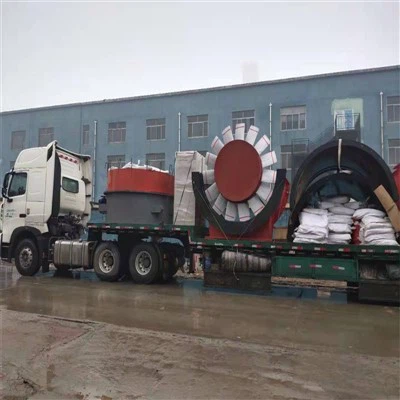
Hey there! As a supplier of Roof Axial Flow Fans, I've seen a lot of folks scratching their heads when it comes to choosing the right size for their needs. It's not as simple as just picking the biggest one on the shelf. There are a bunch of factors to consider, and in this blog, I'll walk you through the whole process.
First things first, let's talk about why size matters. A fan that's too small won't be able to move enough air to do its job properly. You'll end up with stuffy air, high humidity, and maybe even some mold growth. On the other hand, a fan that's too big can be a waste of energy and money. It'll use more electricity than necessary and might even create too much noise. So, getting the right size is crucial.
1. Calculate the Space Volume
The first step in choosing the right size of a roof axial flow fan is to figure out the volume of the space you want to ventilate. This is pretty straightforward. You just need to measure the length, width, and height of the room or area in feet. Then, multiply these three numbers together. For example, if you have a room that's 20 feet long, 15 feet wide, and 10 feet high, the volume would be 20 x 15 x 10 = 3000 cubic feet.
Once you have the volume, you need to decide how many air changes per hour (ACH) you need. This depends on the type of space and what's going on in it. For a residential attic, you might need 6 - 8 ACH. For a commercial kitchen, you'll probably need 15 - 20 ACH or even more because of all the heat, steam, and odors.
To calculate the required airflow in cubic feet per minute (CFM), you use this formula:
CFM = (Space Volume x ACH) / 60
Let's say you have that 3000 - cubic - foot room and you want 8 ACH. The calculation would be:
CFM = (3000 x 8) / 60 = 400 CFM
2. Consider the Static Pressure
Static pressure is another important factor. It's the resistance that the fan has to overcome to move air through the ductwork, vents, and other obstacles. Things like long duct runs, sharp bends, and filters can all increase the static pressure.
If you have a simple setup with short, straight ductwork and no filters, the static pressure will be low. But if you have a complex system with lots of twists and turns, the static pressure will be high.
Most fan manufacturers provide performance curves that show how much airflow a fan can produce at different static pressures. You need to find a fan that can deliver the required CFM at the expected static pressure of your system.
For example, if your calculations show you need 400 CFM and your system has a relatively high static pressure of 0.5 inches of water column, you need to choose a fan that can produce 400 CFM at 0.5 inches of water column according to its performance curve.
3. Look at the Fan's Efficiency
Efficiency is key when it comes to choosing a roof axial flow fan. A more efficient fan will use less electricity to move the same amount of air. This means lower energy bills in the long run.
You can usually find the fan's efficiency rating in the product specifications. Look for fans with high efficiency ratings, especially if you're going to be running the fan for long periods of time.
4. Check the Noise Level
Nobody wants a noisy fan. If the fan is too loud, it can be a real nuisance, especially in residential or quiet commercial settings. Fan noise is measured in decibels (dB).
Most fans will have a noise level rating in their product details. Try to choose a fan with a noise level that's acceptable for your environment. For a home attic, you might want a fan that operates at 50 dB or less.
5. Types of Roof Axial Flow Fans
There are different types of roof axial flow fans available, and each has its own advantages.


- Industrial Axial Flow Roof Top Air Extractor Fan Mushroom Exhaust Fan: These are great for industrial settings where you need to extract a large amount of air. They're designed to be durable and can handle high - volume ventilation. You can check out our Industrial Axial Flow Roof Top Air Extractor Fan Mushroom Exhaust Fan for more details.
- Booster Fan Duct Booster Fan: If you have a long duct run and need to boost the airflow, a booster fan can be a good option. It can help overcome the resistance in the ducts and ensure proper ventilation. Learn more about our Booster Fan Duct Booster Fan.
- Exhaust Fan Roof Air Vent Fan Manufacturer: We're also a leading Exhaust Fan Roof Air Vent Fan Manufacturer. Our exhaust fans are designed to effectively remove stale air, moisture, and odors from your space.
6. Installation and Maintenance
Don't forget about installation and maintenance when choosing a fan. Some fans are easier to install than others. Make sure you choose a fan that you or a professional can install without too much hassle.
Also, consider the maintenance requirements. Fans with easy - to - clean parts and accessible motors will be more convenient in the long run. You don't want to spend hours trying to clean or repair a fan.
Conclusion
Choosing the right size of a roof axial flow fan is a multi - step process. You need to calculate the space volume, consider the static pressure, look at the fan's efficiency and noise level, and choose the right type of fan for your needs. By taking all these factors into account, you can ensure that you get a fan that works well, saves energy, and doesn't make too much noise.
If you're still not sure which fan is right for you, don't hesitate to reach out. We're here to help you make the best choice for your ventilation needs. Whether you're a homeowner looking to ventilate your attic or a business owner in need of a high - performance industrial fan, we've got you covered. Let's talk and find the perfect roof axial flow fan for your project!
References
- ASHRAE Handbook - HVAC Applications
- Fan Manufacturer Product Specifications