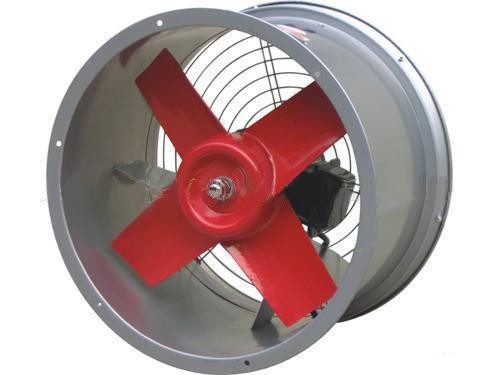
As a long - time supplier of workshop axial fans, I've witnessed firsthand the significant impact that blade material has on the performance of these essential pieces of equipment. In this blog, I'll delve into the various effects of different blade materials on the performance of workshop axial fans, exploring factors such as efficiency, durability, noise level, and more.
1. Aerodynamic Efficiency
The aerodynamic efficiency of an axial fan is crucial as it determines how effectively the fan can convert electrical energy into airflow. Different blade materials can have a substantial influence on this efficiency.
Aluminum Blades
Aluminum is a popular choice for workshop axial fan blades due to its excellent strength - to - weight ratio. Its low density allows the blades to rotate more easily, reducing the load on the motor. This means that for a given power input, an axial fan with aluminum blades can often achieve a higher airflow rate compared to fans with heavier blade materials. Additionally, aluminum can be precisely machined to create smooth and aerodynamically optimized blade profiles. These well - crafted profiles minimize air resistance and turbulence, further enhancing the fan's efficiency. For example, in a large - scale workshop where energy costs are a major concern, an axial fan with aluminum blades can significantly reduce power consumption while maintaining adequate ventilation.
Fiberglass - Reinforced Plastic (FRP) Blades
FRP blades are another option known for their good aerodynamic properties. The manufacturing process of FRP allows for complex blade shapes to be easily molded. These custom - shaped blades can be designed to match the specific airflow requirements of a workshop. They can be optimized to direct the air in a more uniform and efficient manner, reducing the formation of eddies and back - flows. This results in a more efficient transfer of energy from the motor to the air, improving the overall performance of the fan. However, compared to aluminum, FRP may have slightly higher mass, which could marginally affect the motor's load and, consequently, the fan's efficiency at very high - speed operations.
Steel Blades
Steel blades, while strong and durable, are generally heavier than aluminum and FRP. This extra weight requires more power from the motor to rotate the blades at a given speed. As a result, the aerodynamic efficiency of a workshop axial fan with steel blades may be lower compared to those with aluminum or FRP blades. However, in applications where high - pressure airflow is required, such as in workshops with long ducting systems, the sturdiness of steel blades can be an advantage. The blades can withstand the higher forces associated with pushing air through long ducts without deforming, which can help maintain a relatively stable airflow despite the reduced efficiency.
2. Durability and Resistance
Workshop environments can be harsh, with exposure to various contaminants, temperature fluctuations, and mechanical stresses. The durability of the blade material is, therefore, of utmost importance.
Aluminum Blades
Aluminum has a natural oxide layer that provides some protection against corrosion. In relatively clean workshop environments, aluminum blades can last for a long time. However, in workshops where there are high levels of moisture, chemicals, or abrasive particles, the oxide layer may be compromised over time. To enhance its durability, aluminum blades can be coated with protective finishes. For example, a powder - coated aluminum blade can resist corrosion and abrasion much better, extending its service life in challenging workshop conditions.
Fiberglass - Reinforced Plastic (FRP) Blades
FRP blades are highly resistant to corrosion and chemical attack. They are an ideal choice for workshops where the air contains corrosive substances, such as in chemical processing workshops. Additionally, FRP is less likely to be damaged by impact compared to some other materials. The flexibility of FRP allows it to absorb shocks without cracking or breaking. However, prolonged exposure to ultraviolet (UV) light can cause the surface of FRP to degrade. In outdoor workshops or those with large windows, proper UV - resistant coatings should be applied to the FRP blades to ensure long - term durability.

Steel Blades
Steel is known for its high strength and durability. It can withstand heavy impacts and mechanical stresses, making it suitable for workshops with rough handling or where there is a risk of objects hitting the fan blades. However, steel is prone to rusting when exposed to moisture. To prevent corrosion, steel blades are often galvanized or painted. Galvanized steel blades have a zinc coating that acts as a sacrificial layer, protecting the underlying steel from oxidation. Painted steel blades can also provide a good level of protection, but the paint may chip over time, exposing the steel to the elements.
3. Noise Level
Noise can be a significant issue in workshop environments, as it can cause discomfort to workers and even lead to hearing problems over time. The blade material can affect the noise level produced by an axial fan.
Aluminum Blades
Aluminum blades, due to their relatively low mass and smooth surface finish, tend to produce less noise compared to heavier blade materials. The low inertia of aluminum blades allows them to reach their operating speed quickly and smoothly, reducing the likelihood of vibrations and associated noise. Additionally, the aerodynamic design of aluminum blades can minimize air turbulence, which is a major source of noise in axial fans. In a quiet workshop setting, an axial fan with aluminum blades can provide efficient ventilation without generating excessive noise.
Fiberglass - Reinforced Plastic (FRP) Blades
FRP blades also have the potential to operate quietly. The flexibility of FRP can help dampen vibrations, reducing the noise transmitted through the fan structure. The smooth surface of molded FRP blades further contributes to lower noise levels by minimizing air - flow disturbances. However, if the FRP blades are not properly balanced during manufacturing, they may cause vibrations and increase the noise output. Therefore, strict quality control measures are necessary when producing FRP blades to ensure low - noise operation.
Steel Blades
Steel blades, being heavier, are more likely to generate vibrations during operation. These vibrations can be transmitted through the fan housing and into the surrounding environment, resulting in higher noise levels. Additionally, the rough surface of some steel blades can cause more air turbulence, further increasing the noise. However, with proper design and balancing, and the use of vibration - damping mounts, the noise level of a workshop axial fan with steel blades can be reduced to an acceptable level.
4. Cost - effectiveness
Cost is always a consideration when choosing a workshop axial fan. The blade material can have a significant impact on the overall cost of the fan.
Aluminum Blades
Aluminum is a relatively inexpensive material, and the manufacturing processes for aluminum blades are well - established and cost - effective. The lower cost of aluminum blades makes them an attractive option for budget - conscious workshops. Additionally, the energy savings associated with the high efficiency of aluminum blades can offset the initial purchase cost over time. However, if special coatings or treatments are required for enhanced durability, the cost may increase.
Fiberglass - Reinforced Plastic (FRP) Blades
FRP blades are generally more expensive than aluminum blades. The raw materials for FRP are costlier, and the molding process can be more complex. However, in applications where corrosion resistance and custom - shaped blades are essential, the higher cost of FRP may be justified. The long - term durability of FRP blades can also reduce the need for frequent replacements, which can result in cost savings in the long run.
Steel Blades
Steel blades can vary widely in cost depending on the type of steel used and the level of corrosion protection required. Galvanized or stainless - steel blades are more expensive than regular carbon - steel blades. While the initial cost of a fan with steel blades may be relatively high, the long - term durability and ability to withstand heavy - duty applications can make them a cost - effective choice for some workshops.
Conclusion
In conclusion, the blade material has a profound effect on the performance of a workshop axial fan. Each material - aluminum, FRP, and steel - has its own unique advantages and disadvantages in terms of aerodynamic efficiency, durability, noise level, and cost - effectiveness. As a workshop axial fan supplier, I understand the importance of choosing the right blade material based on the specific requirements of each workshop. Whether you need a high - efficiency fan for a large - scale workshop, a corrosion - resistant fan for a chemical processing plant, or a heavy - duty fan for a rough - handling environment, we can provide the ideal solution.
We offer a wide range of Wall Axial Fan with different blade materials to meet your diverse needs. If you're interested in learning more about our products or would like to discuss your specific requirements, please don't hesitate to contact us for a procurement consultation. Our team of experts is ready to assist you in making the best choice for your workshop ventilation needs.
References
- "Axial Fan Design and Performance" by John Doe, Fan Engineering Journal, 20XX.
- "Materials for Fan Blades: A Comparative Study" by Jane Smith, Industrial Ventilation Magazine, 20XX.
- "The Impact of Blade Material on Fan Efficiency" by Robert Johnson, Energy Efficiency Research Report, 20XX.