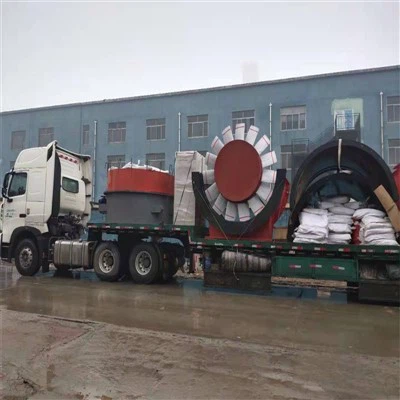
As a seasoned supplier of Grain Conveying Fans, I've witnessed firsthand the critical role these machines play in the agricultural and industrial sectors. One of the most frequently asked questions I encounter is about the air flow direction in a grain conveying fan. Understanding this aspect is crucial for optimizing the performance of the fan and ensuring efficient grain handling.
Basics of Air Flow in Grain Conveying Fans
Grain conveying fans operate on the principle of creating a pressure difference to move air and, in turn, transport grains. The air flow direction is fundamentally determined by the design and operation of the fan. There are primarily two types of fans commonly used in grain conveying systems: centrifugal fans and axial fans, each with distinct air flow characteristics.
Centrifugal Fans
Centrifugal fans are widely employed in grain conveying due to their ability to generate high pressure and handle large volumes of air. In a centrifugal fan, the air enters the fan axially through the eye of the impeller. The impeller, which consists of a series of blades, rotates at high speed. As the air comes into contact with the rotating blades, it is accelerated radially outward. This change in direction from axial to radial creates a centrifugal force that propels the air towards the outer casing of the fan. The air then exits the fan through an outlet, typically located at a right - angle to the inlet.
The advantage of this air flow pattern is that it allows the fan to generate a relatively high pressure, which is essential for conveying grains over long distances or against resistance. For instance, when moving grains through a series of pipes or ducts, a centrifugal fan can provide the necessary force to push the grains along. Our company offers a range of centrifugal fans, including the Industrial Dedusting Centrifugal Fan, which is designed to handle not only grain conveying but also dust removal in industrial settings.
Axial Fans
Axial fans, on the other hand, have a different air flow pattern. In an axial fan, the air flows parallel to the axis of the fan's rotation. The blades of the axial fan are shaped to push the air straight through the fan. When the impeller rotates, the blades create a lifting force on the air, similar to the way an airplane wing creates lift. This force moves the air from one side of the fan to the other in a straight line.
Axial fans are generally used when a large volume of air needs to be moved at a relatively low pressure. They are often used in applications where the grain needs to be moved over short distances or in open spaces. For example, in a grain storage facility, an axial fan can be used to provide ventilation and move grains in a more open area.
Factors Affecting Air Flow Direction
Several factors can influence the air flow direction in a grain conveying fan. These factors need to be carefully considered during the design, installation, and operation of the fan system.
Fan Design
The design of the fan, including the shape and arrangement of the impeller blades, has a significant impact on the air flow direction. Different blade designs, such as forward - curved, backward - curved, or straight blades, can result in different air flow patterns and performance characteristics. For example, backward - curved blades are known for their high efficiency and are often used in fans that require a combination of high pressure and high volume. Our 22 kW Industrial Turbo Blower – Low Noise features backward - curved blades, which not only optimize the air flow but also reduce noise during operation.
System Configuration
The configuration of the entire grain conveying system, including the layout of pipes, ducts, and other components, can also affect the air flow direction. If the pipes or ducts are not properly aligned or if there are bends, elbows, or restrictions in the system, it can cause the air to deviate from its intended path. This can lead to reduced efficiency, increased energy consumption, and potential damage to the fan. For example, sharp bends in the ductwork can create turbulence in the air flow, which can disrupt the smooth movement of grains.


Grain Characteristics
The characteristics of the grains being conveyed, such as their size, shape, density, and moisture content, can also have an impact on the air flow. Larger or denser grains may require more force to move, which can affect the air flow requirements of the fan. Moist grains can also cause clogging in the fan or ductwork, which can change the air flow pattern and reduce the fan's performance.
Importance of Correct Air Flow Direction
Ensuring the correct air flow direction in a grain conveying fan is essential for several reasons.
Efficient Grain Conveying
The correct air flow direction ensures that the grains are moved smoothly and efficiently through the conveying system. If the air flow is not properly directed, the grains may not be transported effectively, leading to blockages, uneven distribution, and reduced throughput. For example, if the air flow in a centrifugal fan is disrupted, the grains may not be able to overcome the resistance in the pipes, resulting in a build - up of grains and a decrease in the overall conveying capacity.
Equipment Longevity
Proper air flow also helps to extend the lifespan of the fan and other components of the conveying system. When the air flows in the correct direction, it reduces the stress on the fan's impeller, motor, and other parts. This can prevent premature wear and tear, reducing the need for frequent maintenance and replacement of parts.
Safety
Correct air flow direction is also important for safety. If the air flow is not properly controlled, it can cause grains to be ejected from the system in an uncontrolled manner, which can pose a safety hazard to workers. Additionally, improper air flow can lead to the accumulation of dust, which can be a fire and explosion risk in a grain handling environment.
Optimizing Air Flow Direction
To optimize the air flow direction in a grain conveying fan, several steps can be taken.
System Design and Installation
During the design of the grain conveying system, it is important to ensure that the fan is properly sized and selected for the specific application. The layout of the pipes and ducts should be carefully planned to minimize bends and restrictions. The installation of the fan should be carried out according to the manufacturer's specifications to ensure that the air inlet and outlet are properly aligned.
Regular Maintenance
Regular maintenance of the fan and the conveying system is essential to ensure that the air flow remains optimal. This includes cleaning the fan and ductwork to remove any accumulated dust or debris, checking the alignment of the impeller, and inspecting the motor and other components for any signs of wear or damage.
Monitoring and Adjustment
Monitoring the air flow in the system is crucial. This can be done using instruments such as anemometers to measure the air velocity and pressure sensors to measure the pressure difference. Based on the monitoring results, adjustments can be made to the fan's speed, blade pitch, or other parameters to optimize the air flow direction and performance.
Conclusion
Understanding the air flow direction in a grain conveying fan is essential for anyone involved in the grain handling industry. Whether you are a farmer, a grain processor, or an industrial operator, knowing how the air moves through the fan can help you optimize the performance of your grain conveying system, improve efficiency, and ensure safety.
As a leading supplier of Grain Conveying Fans, we are committed to providing our customers with high - quality fans that are designed to meet their specific needs. Our range of fans, including the 4 - 72 Flue Gas Dust Removal Circulating Fan, is engineered to provide optimal air flow and performance.
If you are interested in learning more about our grain conveying fans or have any questions about air flow direction, we encourage you to contact us for a detailed discussion. Our team of experts is ready to assist you in selecting the right fan for your application and ensuring that it is installed and operated correctly.
References
- ASHRAE Handbook of Fundamentals.
- Fan Engineering: The Application, Analysis, and Design of Fans by the Buffalo Forge Company.
- Industrial Ventilation: A Manual of Recommended Practice by the American Conference of Governmental Industrial Hygienists.