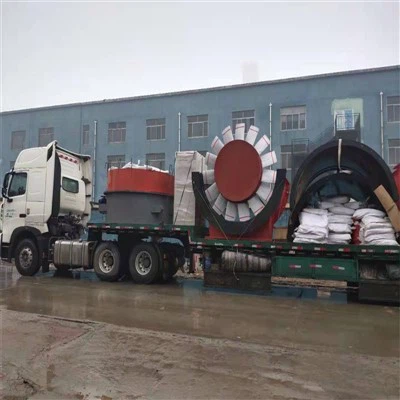
Hey there! I'm a supplier of Boiler Induced Draft Fans, and today I wanna chat about the performance differences between single - stage and multi - stage Boiler Induced Draft Fans.
Let's start with the basics. A Boiler Induced Draft Fan is a crucial component in a boiler system. It's responsible for removing the flue gases from the boiler and creating a negative pressure inside the furnace. This helps in the efficient combustion of fuel and the proper operation of the boiler. As a supplier, I've seen firsthand how different types of fans can impact the overall performance of a boiler system.
Single - Stage Boiler Induced Draft Fans
Single - stage fans are, well, just what the name implies. They have one stage of impellers that do all the work of moving the flue gases. These fans are relatively simple in design. They're like the workhorses of the fan world, straightforward and to the point.
One of the biggest advantages of single - stage fans is their simplicity. With fewer parts, there's less that can go wrong. Maintenance is usually a breeze. You don't have to deal with the complexity of multiple impellers and stages. If something breaks, it's often easier to identify and fix the problem. This simplicity also means they're generally more affordable upfront. For smaller boiler systems or those on a tight budget, a single - stage fan can be a great choice.
In terms of performance, single - stage fans are great for applications where the pressure requirements are relatively low. They can move a decent volume of air, but they're not built for high - pressure situations. If your boiler doesn't need a huge amount of suction to remove the flue gases, a single - stage fan can get the job done efficiently.
However, single - stage fans do have their limitations. They struggle when it comes to high - pressure applications. If you need to create a large negative pressure in the boiler, a single - stage fan might not be up to the task. The impeller can only generate so much pressure, and once you hit its limit, the performance starts to drop off. Also, they're not as energy - efficient as multi - stage fans in high - pressure scenarios. They have to work harder to achieve the same results, which means higher energy consumption.


Multi - Stage Boiler Induced Draft Fans
Now, let's talk about multi - stage fans. These are the more complex cousins of single - stage fans. They have multiple stages of impellers, each one building on the work of the previous one. It's like a relay race, where each impeller passes the baton (or in this case, the air) to the next one, increasing the pressure with each stage.
The main advantage of multi - stage fans is their ability to generate high pressures. They're perfect for large boiler systems or those with high - pressure requirements. If you need to move a large volume of flue gases against a high resistance, a multi - stage fan is the way to go. They can create a much stronger suction, which is essential for efficient combustion and proper removal of the flue gases.
In terms of energy efficiency, multi - stage fans shine in high - pressure applications. Since they can generate high pressures more effectively, they don't have to work as hard as single - stage fans. This means lower energy consumption and cost savings in the long run. They're also more flexible in terms of performance. You can adjust the number of stages and the configuration to meet the specific needs of your boiler system.
But, as with anything, multi - stage fans have their drawbacks. Their complex design means they're more expensive upfront. You're paying for all those extra impellers and stages. Maintenance can also be a bit of a headache. With more parts, there's more that can go wrong. You need to have a skilled technician on hand to diagnose and fix problems. And if something does break, it can be more expensive to repair.
Performance Comparison
Let's dig deeper into the performance differences between the two types of fans.
Pressure Generation
As I mentioned earlier, multi - stage fans are the clear winners when it comes to high - pressure applications. They can generate much higher pressures than single - stage fans. For example, in a large industrial boiler system where the flue gases have to be removed against a high resistance, a multi - stage fan can create the necessary negative pressure to ensure proper operation. A single - stage fan would struggle to achieve the same pressure, leading to inefficient combustion and potential problems with the boiler.
Airflow Volume
Single - stage fans can move a decent volume of air, but multi - stage fans can also handle large volumes, especially when combined with their high - pressure capabilities. In some cases, a multi - stage fan can move more air at a higher pressure than a single - stage fan. However, if your application only requires a moderate volume of air and low pressure, a single - stage fan can be just as effective.
Energy Efficiency
When it comes to energy efficiency, it really depends on the application. In low - pressure applications, single - stage fans can be quite efficient because they're not over - engineered for the task. But in high - pressure applications, multi - stage fans are much more energy - efficient. They can achieve the same or better results with less energy consumption, which is a big plus for long - term operating costs.
Noise Level
Single - stage fans are generally quieter than multi - stage fans. With fewer moving parts and a simpler design, there's less vibration and noise. Multi - stage fans, on the other hand, can be a bit noisier due to the complexity of their design and the interaction between multiple impellers. However, modern multi - stage fans are designed with noise - reduction features to minimize this issue.
Real - World Applications
Let's look at some real - world applications to see how these performance differences play out.
Small Residential Boilers
For small residential boilers, a single - stage fan is often the best choice. These boilers don't require a high - pressure suction to remove the flue gases. A single - stage fan can move the necessary volume of air at a low pressure, and its simplicity and affordability make it a great fit for home use. You can check out our Centrifugal Fan for more options suitable for small - scale applications.
Large Industrial Boilers
Large industrial boilers, on the other hand, usually need the high - pressure capabilities of multi - stage fans. These boilers have to remove large volumes of flue gases against high resistance. A multi - stage fan can create the necessary negative pressure to ensure efficient combustion and proper operation. Our The High - Efficiency, Low - Noise Boiler Centrifugal Fan is a great option for industrial applications.
Brick Kilns
In brick kilns, the requirements can vary. Some smaller kilns might do well with a single - stage fan, while larger ones with higher pressure needs will benefit from a multi - stage fan. You can learn more about fans for brick kilns by visiting our Centrifugal Fan for Brick Kiln page.
Making the Right Choice
So, how do you decide which type of fan is right for your boiler system? Well, it all comes down to your specific requirements. Consider the pressure and airflow volume your boiler needs. If you have a small system with low - pressure requirements, a single - stage fan is probably your best bet. But if you have a large system or need high - pressure suction, a multi - stage fan is the way to go.
Don't forget to factor in the cost. While single - stage fans are cheaper upfront, multi - stage fans can save you money in the long run due to their energy efficiency. And think about maintenance. If you have a skilled maintenance team, the complexity of a multi - stage fan might not be an issue. But if you're on your own or have limited resources, a single - stage fan's simplicity could be a big advantage.
Contact Us for Your Fan Needs
If you're still not sure which type of Boiler Induced Draft Fan is right for you, don't worry! We're here to help. As a supplier, we have the expertise and experience to guide you through the selection process. Whether you need a single - stage or multi - stage fan, we can provide you with the best solution for your boiler system. Contact us today to start the conversation about your fan requirements and let's work together to find the perfect fit for your application.
References
- ASHRAE Handbook - HVAC Systems and Equipment.
- Fan Engineering: The Application, Selection, and Testing of Fans, Fourth Edition.