How does the air flow rate affect the performance of an indoor axial fan?
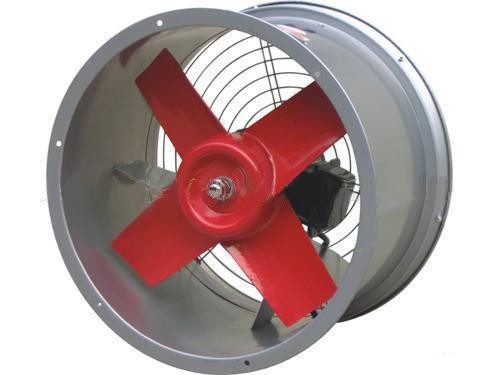
As a supplier of indoor axial fans, I've witnessed firsthand the crucial role that air flow rate plays in determining the performance of these essential devices. Indoor axial fans are widely used in various settings, from residential homes to commercial buildings, to provide ventilation, cooling, and air circulation. Understanding how air flow rate impacts their performance is key to selecting the right fan for your specific needs.
The Basics of Air Flow Rate
Air flow rate, typically measured in cubic feet per minute (CFM) or cubic meters per hour (m³/h), refers to the volume of air that a fan can move within a given time frame. It is a fundamental metric that directly influences the effectiveness of an indoor axial fan. A higher air flow rate means that the fan can move more air, which is generally desirable for applications where rapid ventilation or cooling is required.
Impact on Ventilation
One of the primary functions of an indoor axial fan is to provide ventilation, which helps to remove stale air, odors, and pollutants from an enclosed space. The air flow rate of the fan determines how quickly it can exchange the indoor air with fresh outdoor air. In a small room, a fan with a relatively low air flow rate may be sufficient to maintain adequate ventilation. However, in larger spaces such as warehouses or industrial workshops, a high - air - flow fan is necessary to ensure proper air circulation and ventilation.
For example, in a kitchen, where cooking generates a significant amount of smoke, steam, and odors, a fan with a high air flow rate can quickly remove these contaminants from the air, creating a more comfortable and healthy environment. On the other hand, if the air flow rate is too low, the pollutants will linger in the air, leading to poor air quality and potential health issues.
Cooling Performance
In addition to ventilation, indoor axial fans are often used for cooling purposes. The air flow rate affects the cooling efficiency of the fan by determining how effectively it can transfer heat away from a particular area. When air moves over a hot surface, it carries away heat through a process called convection. A higher air flow rate means that more air is passing over the hot surface, resulting in a greater rate of heat transfer.
In a computer server room, for instance, where servers generate a large amount of heat, high - air - flow axial fans are used to keep the equipment cool. If the air flow rate is insufficient, the servers may overheat, leading to reduced performance, system failures, and potentially costly repairs.
Noise Level
While a higher air flow rate generally means better ventilation and cooling performance, it can also have an impact on the noise level of the fan. As the fan works harder to move more air, it tends to generate more noise. This is because the blades of the fan are moving at a higher speed, creating more turbulence in the air.
Manufacturers of indoor axial fans are constantly working to balance air flow rate and noise level. Advanced fan designs, such as those with aerodynamically optimized blades and variable speed controls, can help to achieve a high air flow rate while keeping the noise level at an acceptable level. For applications where noise is a concern, such as in bedrooms or offices, it is important to choose a fan that offers a good balance between air flow rate and noise.
Energy Consumption
Another important factor to consider is the energy consumption of the fan. Generally, fans with a higher air flow rate consume more energy. This is because they require more power to drive the blades at a higher speed to move the increased volume of air. However, modern axial fans are becoming more energy - efficient, thanks to advancements in motor technology and fan design.
When selecting an indoor axial fan, it is essential to consider the energy efficiency rating of the fan in addition to the air flow rate. Energy - efficient fans can help to reduce electricity costs over the long term, especially if the fan is used for extended periods.
Choosing the Right Air Flow Rate
Selecting the appropriate air flow rate for an indoor axial fan depends on several factors, including the size of the space, the purpose of the fan (ventilation or cooling), and the specific requirements of the application. As a general rule of thumb, a larger space will require a fan with a higher air flow rate.
For residential applications, a fan with an air flow rate of 100 - 500 CFM may be sufficient for small rooms such as bathrooms or closets. In larger rooms like living rooms or bedrooms, a fan with an air flow rate of 500 - 1000 CFM may be more appropriate. For commercial and industrial applications, the air flow rate requirements can be much higher, often exceeding 1000 CFM.
It is also important to consider the static pressure of the system. Static pressure refers to the resistance that the air encounters as it moves through the ductwork, filters, and other components of the ventilation system. If the static pressure is high, the fan will need to work harder to maintain the desired air flow rate. In such cases, a fan with a higher pressure - capacity may be required.
Our Product Range
As an indoor axial fan supplier, we offer a wide range of fans with different air flow rates to meet the diverse needs of our customers. Our Wall Axial Fan is a popular choice for both residential and commercial applications. It is designed to provide high - air - flow ventilation while being energy - efficient and quiet.
Our fans are engineered using the latest technology and high - quality materials to ensure reliable performance and long - term durability. Whether you need a fan for a small room or a large industrial space, we have the expertise and products to meet your requirements.
Contact Us for Procurement
If you are in the market for an indoor axial fan and need assistance in selecting the right air flow rate for your specific application, we are here to help. Our team of experts can provide you with detailed information about our products, answer your questions, and guide you through the procurement process.
We understand that every customer has unique needs, and we are committed to providing customized solutions that meet your exact specifications. Whether you are a homeowner looking to improve the ventilation in your kitchen or a business owner in need of industrial - grade fans for your warehouse, we have the products and services to meet your needs.
Contact us today to start a conversation about your indoor axial fan requirements. We look forward to working with you to find the perfect solution for your ventilation and cooling needs.

References
- Cengel, Y. A., & Turner, R. H. (2007). Fundamentals of Thermal - Fluid Sciences. McGraw - Hill.
- ASHRAE Handbook - Fundamentals. American Society of Heating, Refrigerating and Air - Conditioning Engineers.
- Fan Engineering: The Application, Selection, and Testing of Fans. Buffalo Forge Company.