

In the modern digital age, data centers are the nerve centers of numerous industries, housing critical servers and networking equipment. These facilities generate a substantial amount of heat, and efficient cooling is essential to maintain optimal performance and prevent equipment failure. Wall axial fans play a crucial role in the ventilation and cooling systems of data centers. As a Wall Axial Fan supplier, I understand the importance of selecting the right specifications for these fans to ensure the smooth operation of data centers. In this blog, I will discuss the key specifications of wall axial fans that are suitable for a data center.
Airflow Rate
The airflow rate, measured in cubic feet per minute (CFM) or cubic meters per hour (m³/h), is one of the most important specifications to consider when choosing a wall axial fan for a data center. A higher airflow rate means that the fan can move more air through the space, which is essential for removing heat generated by the servers. The required airflow rate depends on the size of the data center, the number of servers, and the heat load.
To calculate the required airflow rate, you need to know the total heat load of the data center. The heat load is the amount of heat generated by the servers and other equipment in the data center. You can estimate the heat load by multiplying the power consumption of the equipment by a conversion factor. Once you have the heat load, you can use the following formula to calculate the required airflow rate:
[
\text{Airflow Rate (CFM)} = \frac{\text{Heat Load (BTU/h)}}{1.08 \times \Delta T}
]
where (\Delta T) is the temperature difference between the inlet and outlet of the cooling system.
For example, if the heat load of a data center is 100,000 BTU/h and the temperature difference is 20°F, the required airflow rate would be:
[
\text{Airflow Rate (CFM)} = \frac{100,000}{1.08 \times 20} \approx 4630 \text{ CFM}
]
As a Wall Axial Fan supplier, I offer a range of fans with different airflow rates to meet the specific needs of data centers. You can Wall Axial Fan on our website to find the fan with the appropriate airflow rate for your data center.
Static Pressure
Static pressure is another important specification to consider when selecting a wall axial fan for a data center. Static pressure is the resistance that the fan needs to overcome to move air through the ductwork, filters, and other components of the ventilation system. A higher static pressure means that the fan can overcome more resistance and maintain a consistent airflow rate.
The required static pressure depends on the design of the ventilation system. If the ductwork is long or has many bends, the static pressure will be higher. Similarly, if the filters are dirty or have a high resistance, the static pressure will also be higher.
When choosing a wall axial fan, you need to select a fan with a static pressure rating that is higher than the required static pressure of the ventilation system. This will ensure that the fan can maintain a consistent airflow rate even when the resistance in the system changes.
As a Wall Axial Fan supplier, I offer fans with different static pressure ratings to meet the specific needs of data centers. Our fans are designed to provide high static pressure and efficient airflow, even in challenging ventilation systems.
Noise Level
Noise level is an important consideration in a data center, as excessive noise can be a distraction to the staff and may also indicate a problem with the ventilation system. The noise level of a wall axial fan is measured in decibels (dB).
When selecting a wall axial fan for a data center, you need to choose a fan with a low noise level. A noise level of less than 60 dB is generally considered acceptable in a data center.
There are several factors that can affect the noise level of a wall axial fan, including the fan speed, the blade design, and the motor type. As a Wall Axial Fan supplier, I offer fans with advanced blade designs and high-efficiency motors that are designed to minimize noise. Our fans are also equipped with sound insulation materials to further reduce the noise level.
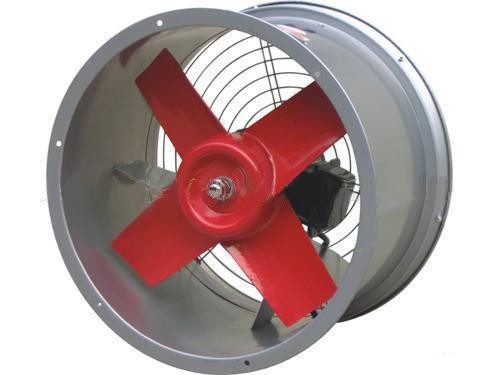

Efficiency
Efficiency is an important consideration when choosing a wall axial fan for a data center, as it can have a significant impact on the energy consumption and operating costs of the ventilation system. The efficiency of a wall axial fan is measured by the airflow rate per unit of power consumption, also known as the specific airflow rate.
A higher specific airflow rate means that the fan can move more air with less power consumption, which is more energy-efficient. When selecting a wall axial fan, you need to choose a fan with a high specific airflow rate to minimize the energy consumption of the ventilation system.
As a Wall Axial Fan supplier, I offer fans with high-efficiency motors and advanced blade designs that are designed to maximize the specific airflow rate. Our fans are also tested and certified to meet the highest energy efficiency standards, which can help you reduce the operating costs of your data center.
Durability and Reliability
Durability and reliability are essential considerations in a data center, as the ventilation system needs to operate continuously to maintain the optimal temperature and humidity levels. A wall axial fan that is not durable or reliable can lead to downtime and costly repairs.
When selecting a wall axial fan for a data center, you need to choose a fan that is made of high-quality materials and has a robust design. The fan should be able to withstand the harsh environmental conditions in a data center, including high temperatures, humidity, and dust.
As a Wall Axial Fan supplier, I offer fans that are made of high-quality materials, such as aluminum alloy and stainless steel, which are corrosion-resistant and durable. Our fans are also designed with a robust motor and bearing system that can withstand continuous operation and provide reliable performance.
Control and Monitoring
In a data center, it is important to have control and monitoring capabilities for the ventilation system to ensure optimal performance and energy efficiency. A wall axial fan that can be controlled and monitored remotely can provide greater flexibility and convenience.
When selecting a wall axial fan for a data center, you need to choose a fan that is compatible with the control and monitoring system of your data center. The fan should be able to be controlled based on the temperature, humidity, and other environmental parameters in the data center.
As a Wall Axial Fan supplier, I offer fans that are compatible with a range of control and monitoring systems, including building automation systems and energy management systems. Our fans can be controlled remotely using a smartphone or a computer, which provides greater flexibility and convenience.
Conclusion
Selecting the right specifications of wall axial fans is crucial for the efficient operation of a data center. As a Wall Axial Fan supplier, I understand the specific needs of data centers and offer a range of fans with different specifications to meet these needs. When choosing a wall axial fan for your data center, you need to consider the airflow rate, static pressure, noise level, efficiency, durability, reliability, and control and monitoring capabilities.
If you are interested in purchasing wall axial fans for your data center, please contact us to discuss your specific requirements. Our team of experts will be happy to help you select the right fans for your data center and provide you with a competitive quote.
References
- ASHRAE Handbook - HVAC Systems and Equipment.
- Data Center Energy Efficiency: A Beginner's Guide.
- Fan Engineering: The Application of Air Moving Equipment.
